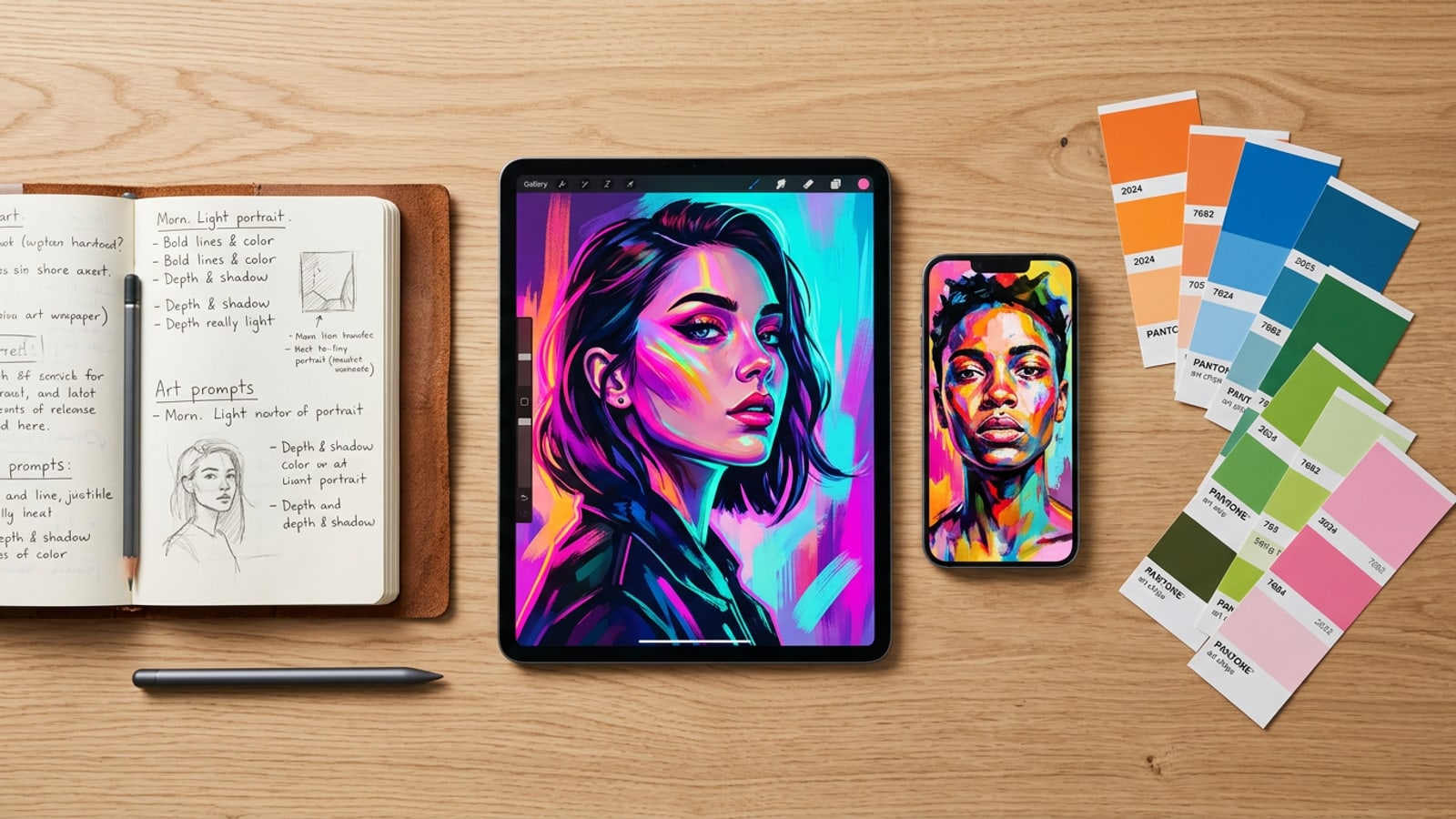
Visual Outcome & The Persistence Imperative
Understand why proactive asset exporting is essential for Cara creators on iOS and how session-based rendering impacts project retention.
Creating high-resolution digital artwork, stylized portrait renders, and conversational photo edits in Cara delivers stunning visual outcomes on iPhone and iPad. However, maintaining long-term access to your finished outputs requires an active, deliberate local preservation routine. Because Cara relies on remote cloud processing to render Text-to-Image requests and Conversational Photo Editing commands without maintaining an automated, persistent in-app project draft vault in client version 1.4.6, working session buffers exist temporarily during live interactions.[1]
When you close the app, switch between heavy mobile applications, or reset active conversational chat threads in Home > Agent, unexported active renders can become inaccessible once the memory buffer clears. Mobile creators often assume cloud processing inherently provides permanent draft archiving on remote servers, but cloud rendering executes per-request tasks rather than persistent user project storage. Establishing an immediate export and prompt journaling routine on iOS is the most reliable way to preserve your creative work against accidental session timeouts or app updates.[1]
- Session Buffer Volatility: Active chat queues and rendered image buffers in Home > Agent reset when memory buffers clear or app instances restart.[1]
- Irreversible Edit Sequences: Complex natural language modifications cannot be automatically re-rolled to exact previous states without recording specific prompt strings.[1]
- Device-Bound Storage Isolation: Assets generated in mobile sessions reside strictly within active iOS client buffers until manually committed to the camera roll or Apple Files.[1][2]
Step-by-Step Workflow: Preserving Your Works in Progress
Follow a methodical four-step mobile backup routine to save image renders, copy prompt strings, organize photo albums, and automate cloud sync.
Protecting your mobile AI generations requires a proactive workflow that spans immediate image saving, prompt history logging, structured asset organization, and background cloud synchronization.[1][2]
By incorporating these four steps directly into your daily creation habits, you insulate your artwork against session resets, loss of prompt parameters, or device hardware issues.[1][2][6]
- Log Natural Language Prompts in Notes
Copy your custom natural language prompt strings from Home > Agent and paste them into Apple Notes or a designated digital prompt journal. Retaining exact prompt phrasing ensures you can recreate or refine complex Conversational Photo Editing recipes in future sessions.[1]
- Create Dedicated Creative Project Albums
Open the Apple Photos app on iOS or iPadOS, tap the Plus icon under Albums, and create dedicated folders such as 'Cara Source Renders' and 'Cara Final Edits' to keep raw uploads and completed outputs neatly structured.[2]
Managing Raw Source Assets & Iterative Renders
Organize input photos, source clips, and multi-step AI transformations to prevent loss during complex edits.
Multi-stage digital edits—such as isolating background elements with Remove Background, expanding canvas borders using Image Extender (Outpainting), or colorizing historical prints via Photo Colorize—depend heavily on clean source asset management. If your initial source image or an intermediate render gets deleted or displaced from your camera roll, continuing an iterative edit thread becomes impossible.[1][2]
To establish a robust non-destructive editing workflow on mobile devices, keep raw source photos strictly separated from generative edits. Before uploading a photo to Home > Agent for conversational relighting, object removal with AI Eraser, or generative replacement with AI Replace, duplicate the original file into a dedicated project album in Apple Photos.[1][2]
- Source Photo Protection: Always retain original unedited camera captures in a master 'Raw Sources' album before running tools like Remove Background or Photo Colorize.[1][2]
- Intermediate Milestone Saving: Save full-resolution image outputs after each major modification pass (e.g., Outpainting step -> AI Eraser pass -> Colorize adjustment) to preserve complete rollback options.[1][2]
- Version Tagging: Use caption notes in Apple Photos to label intermediate renders with key prompt changes or tool names for easy asset tracking.[2]
Archiving Workflows Using iOS Files & External Drives
Establish a robust multi-tier archiving strategy with Apple Files, iCloud Drive, and external storage hardware for digital artists.
While Apple Photos synced with iCloud provides excellent daily backup protection, serious digital storytellers and mobile artists need a dedicated document file hierarchy for complete project archiving. The iOS Files app allows you to build custom project folders in iCloud Drive or locally under 'On My iPhone', storing high-resolution image renders, video source clips, and text documents in one unified directory.[2][4][5]
For creators producing large volumes of high-resolution AI renders, Video to Manga comic layouts, or Photo Collage Maker projects, connecting a USB-C external solid-state drive (SSD) directly to an iPhone or iPad offers local cold-storage redundancy. Transferring completed project folders to external physical storage ensures your creative portfolio remains safe even during extended offline periods or iCloud storage limit constraints.[2][4][6]
- iCloud Drive Folder Structures: Create nested directories in Files (e.g., Files > iCloud Drive > Cara Projects > [Project Name]) containing subfolders for 'Source Media', 'Prompts', and 'Final Renders'.[2][4]
- Direct USB-C SSD Archiving: Plug an external SSD into your iPhone or iPad, open Files, and copy entire project folders directly to hardware storage for off-cloud physical protection.[2][4][6]
- Metadata & Text Archiving: Store text documents (.txt or Markdown) alongside image files in Apple Files containing prompt logs, model parameters, and creation dates.[1][2][4]
Decision Framework: Choosing the Right Export Format
Select optimal storage targets and image formats for outpainting, comic layouts, and photo collages created in Cara.
Matching your Cara feature outputs with the correct storage target prevents cumulative quality loss and keeps your asset library structured for future editing or sharing across platforms.[1][2]
When working across diverse features—such as Image Extender outpainting, Video to Manga panel layouts, and Photo Collage Maker grids—following a standardized export decision matrix ensures optimal visual fidelity and long-term project organization.[1][2]
- Image Extender (Outpainting) outputs: Save as full-resolution PNG image files to preserve newly expanded edge pixels and boundary details without introducing compression artifacts.[1][2]
- Video to Manga page outputs: Save multi-panel comic pages directly as high-resolution image renders into a dedicated 'Manga Strips' album in Photos for smooth digital reading or social sharing.[1][2]
- Photo Collage Maker outputs: Save custom grid compositions in high-resolution image formats within your main creative library to retain crisp template borders and cutout quality.[1][2]
- Conversational Photo Editing iterations: Save interim renders at each major prompt step so you retain a complete non-destructive edit history if you decide to rollback an aesthetic choice.[1]