Core Analytical Findings
This deep research report synthesizes official panel disclosures from San Diego Comic-Con 2026, corporate output filings from The Walt Disney Company, regional theatrical box office tracking across North American and Latin American markets, and entertainment trade reports detailing creative team attachments. Cross-market audience sentiment and historical filmography track records were systematically evaluated to assess Marvel Studios' Phase 7 supernatural strategy.
Shift from Studio-Led Directing to Star-Driven Talent Packaging
Marvel Studios is increasingly accepting pre-assembled creative talent trusts brought directly by A-list stars rather than molding indie directors around internal studio templates.[1][4]
- Evidence chain
- Ryan Gosling personally assembled director Shawn Levy and screenwriter Jonathan Tropper following their work on Star Wars: Starfighter, presenting the team directly to Kevin Feige at Marvel Studios.
- Why it matters
- Grants leading actors unprecedented creative leverage while mitigating production risk on high-budget supernatural tentpoles through pre-existing creative chemistry.
- Limit
- This packaged approach may raise baseline production budgets and compress opportunities for lower-budget, auteur-driven character origins.
Retroactive World-Building to Bypass Origin Exposition
Marvel Studios pre-established core supernatural infrastructure in earlier streaming and film titles to skip redundant origin exposition in Ghost Rider.[2][5]
- Evidence chain
- The introduction of Sacha Baron Cohen as Mephisto in Ironheart established the demonic broker responsible for Johnny Blaze's hellish contract well before the standalone film's pre-production.
- Why it matters
- Enables the 2028 theatrical release to launch immediately into fast-paced narrative conflict and Midnight Sons crossover setups.
- Limit
- Requires casual theatrical moviegoers to maintain familiarity with Disney+ streaming series continuity.
Divergent Regional Market Reception (North America vs. Latin America)
North American audiences prioritize comic lore fidelity and superhero universe crossovers, whereas Latin American fandoms place heavy emphasis on director tone and star-power draw.[2][3][4][13]
- Evidence chain
- Brazilian commentary highlights deep concern regarding Shawn Levy's four-quadrant comedic history alongside enthusiasm for Ryan Gosling's proven box office tracking in Brazil.
- Why it matters
- International marketing campaigns in Latin America must heavily highlight screenwriter Jonathan Tropper's violent action pedigree to reassure core comic fans.
- Limit
- Early social media sentiment in regional markets does not always correlate directly with final opening weekend box office returns.
This analysis relies upon confirmed SDCC 2026 announcements, historical box office metrics, and current production schedules. Final creative execution, rating classifications, and release schedules remain subject to studio modifications ahead of the 2028 theatrical window.
Marvel Casts Ryan Gosling as Ghost Rider: SDCC 2026 Reveal Details
Marvel Studios officially announced Ryan Gosling as Johnny Blaze in Ghost Rider, directed by Shawn Levy, targeting a 2028 theatrical debut.
During the landmark Marvel Studios presentation in Hall H at San Diego Comic-Con 2026, Kevin Feige delivered one of the most significant casting confirmations of the current MCU era: Oscar nominee Ryan Gosling will star as Johnny Blaze in a standalone cinematic reboot of Ghost Rider. Gosling made a surprise appearance on stage alongside director Shawn Levy, confirming that active pre-production is under way for a targeted 2028 theatrical release window.[1][6][10]
The announcement brings closure to years of persistent fan speculation and industry rumors regarding who would take over the mantle of the Spirit of Vengeance. Following Nicolas Cage's dual feature film portrayals in 2007 and 2011, as well as Gabriel Luna's television performance as Robbie Reyes on Agents of S.H.I.E.L.D., Marvel Studios is positioning Johnny Blaze not as a peripheral midnight horror project, but as a central, high-budget tentpole meant to anchor the supernatural expansion of Phase 7.[1][5][11]
Screenwriter Jonathan Tropper has been tapped to pen the script, reuniting the core creative leadership from Lucasfilm's Star Wars: Starfighter. By locking in a star of Gosling's global caliber alongside a director proven in massive visual-effects blockbusters, Marvel Studios signals a aggressive commitment to making Ghost Rider a premier global franchise.[1][4][7]
- Lead Actor: Ryan Gosling as Johnny Blaze / Ghost Rider[1]
- Director: Shawn Levy (Deadpool & Wolverine, Free Guy, Stranger Things)[1][6]
- Screenwriter: Jonathan Tropper (Banshee, Warrior, Star Wars: Starfighter)[1][4]
- Production Slate: Targeted 2028 theatrical release under Marvel's Phase 7 schedule[8][9]
A Match Made in Hell? Why Ryan Gosling Pursued the Spirit of Vengeance
Ryan Gosling's long-standing desire to play Ghost Rider evolved into a pre-packaged production deal alongside director Shawn Levy.
Ryan Gosling's attachment to Ghost Rider is not the result of a traditional studio talent search or casting call. For several years, Gosling publicly voiced his passion for the character in media interviews, frequently citing his love for motorcycle culture, vintage stunt aesthetics, and the complex anti-hero psychology of Johnny Blaze. Rather than waiting for a conventional pitch from Marvel Studios, Gosling took a proactive role in sculpting the project's creative engine from the ground up.[1][3]
The operational blueprint for the film solidified during the production of Star Wars: Starfighter, where Gosling, director Shawn Levy, and screenwriter Jonathan Tropper developed a seamless collaborative chemistry. Recognizing the potential to translate that shared creative vision to comic book cinema, Gosling presented the trio as a unified, pre-packaged deal directly to Kevin Feige. This star-led packaging strategy represents a notable shift in how Marvel Studios secures top-tier talent, moving away from in-house director assignments toward actor-curated creative trusts.[1][2][4]
By bringing Levy and Tropper into the fold early, Gosling ensured that the project's development would be aligned with his vision for Johnny Blaze. This collaborative trust gives the lead actor greater creative investment while offering Marvel Studios a turnkey production package with established working relationships already in place.[1][4]
The Tonal Debate: Can Shawn Levy Deliver Ghost Rider's Dark Edge?
Concerns over Shawn Levy's four-quadrant background are offset by screenwriter Jonathan Tropper's pedigree in visceral action storytelling.
In the immediate aftermath of the SDCC announcement, online fan debate focused heavily on director Shawn Levy's creative track record. Best known for accessible, broad-audience blockbusters such as the Night at the Museum franchise, Free Guy, and Deadpool & Wolverine, Levy's filmography leans heavily toward four-quadrant humor, emotional warmth, and commercial polish. Skeptics within the comic community raised immediate questions about whether Levy's directing style might sanitize Ghost Rider's inherently demonic, dark occult roots in favor of lighthearted family entertainment.[2][4][6]
However, a deeper look at the creative team reveals a crucial counterweight: screenwriter Jonathan Tropper. As the creator and showrunner of critically acclaimed, ultra-violent action series like Banshee and Warrior, Tropper brings a celebrated track record of gritty, hard-hitting physical combat, complex anti-hero motivations, and uncompromising narrative tension. His presence as screenwriter signals that the film's action mechanics will maintain a heavy, visceral impact.[1][4]
This pairing indicates that Marvel Studios is targeting a hybrid tonal synthesis. Levy provides the high-octane visual flair, kinetic pacing, and broad theatrical craftsmanship necessary for a summer blockbuster, while Tropper supplies the grounded violence and emotional severity essential for the Spirit of Vengeance. Together, they aim to deliver a film that appeals to general moviegoers without sacrificing the character's signature edge.[2][4]
- Director Strengths (Levy): Masterful visual spectacle, tight narrative pacing, four-quadrant appeal, and massive commercial experience.[2][6]
- Writer Strengths (Tropper): High-intensity physical choreography, visceral combat sequences, and dark character psychology.[4]
- Strategic Synthesis: A high-budget action-thriller model designed to broaden Ghost Rider's box office reach beyond niche horror audiences.[2][4]
How Ghost Rider Fits into Marvel's Phase 7 Supernatural Expansion
Ghost Rider anchors a broader supernatural shift in Phase 7, leveraging pre-established characters like Mephisto.
Ghost Rider is designed to serve as the narrative cornerstone for Marvel Studios' expanding supernatural domain in Phase 7. Rather than treating supernatural elements as isolated side projects, Marvel is building a cohesive occult slate. Positioning Johnny Blaze early in Phase 7 provides a powerful anchor for long-rumored crossover initiatives, such as a formal Midnight Sons team-up movie uniting characters like Blade, Moon Knight, and Werewolf by Night.[5]
Crucially, Marvel Studios has spent multiple phases laying quiet narrative groundwork so that Ghost Rider can avoid lengthy origin exposition. A primary example is the strategic introduction of Sacha Baron Cohen as Mephisto in the Disney+ series Ironheart. By establishing Mephisto as the dark dealmaker behind Anthony Ramos's character, The Hood, Marvel pre-introduced the exact cosmic demon responsible for binding Johnny Blaze to the Spirit of Vengeance in comic lore.[2][5]
This pre-established connective tissue allows the 2028 film to skip repetitive backstory mechanics and launch immediately into full-throttle action. Johnny Blaze can enter the narrative with his supernatural pact already forged, allowing the film to focus on his internal conflict, his rivalry with rival supernatural entities, and his eventual integration into the broader Marvel Cinematic Universe. Furthermore, this approach demonstrates Marvel's evolving strategy of using television series to handle complex mythological world-building, freeing up theatrical feature films to deliver streamlined, high-pacing cinematic experiences.[2][4][5]
Corporate Output Mandates vs. High-Priority Talent Packages
Disney's strict annual film caps highlight how star-led packages receive priority status within Marvel's production calendar.
The scheduling of Ghost Rider for a 2028 theatrical release reveals an insightful look into Disney's ongoing corporate strategy. The Walt Disney Company CEO Bob Iger previously announced a strict operational mandate capping Marvel Studios to a maximum of three theatrical feature films per calendar year. This corporate policy was designed to curb franchise fatigue, maintain rigorous quality control, and restore premium event status to Marvel releases.[3]
However, the inclusion of Ghost Rider on the preliminary 2028 slate alongside heavyweight titles like Black Panther 3 illustrates how high-profile talent packages are evaluated internally. When an A-list star of Ryan Gosling's caliber pairs with a hitmaking director like Shawn Levy, the resulting project is categorized as a tier-one priority that can adjust studio calendar allocations.[1][3][9]
Disney executives view the Gosling-Levy combination as a commercially safe, highly bankable package capable of generating global theatrical momentum. Consequently, Marvel Studios is willing to adjust release pacing to accommodate premier talent trusts, ensuring that Ghost Rider receives prime summer theatrical real estate.[1][3]
Global Market Dynamics: North American Lore vs. South American Star Power
Ryan Gosling's international box office draw provides commercial backing for Marvel's supernatural gamble across key regions like Brazil.
A comparative analysis of audience reception highlights distinct priorities across key global theatrical markets. In North America, fan discussions online focus primarily on comic book lore, stunt driving fidelity, and how Johnny Blaze will interact with existing MCU heroes. In contrast, international markets—particularly in Latin America—demonstrate different commercial drivers centered on actor star power and director reputation.[2][5]
In Brazil, Ryan Gosling has established extraordinary box office momentum as a leading man. His sci-fi spectacle Devoradores de Estrelas (released in English-speaking markets as Project Hail Mary) delivered a massive opening weekend gross of R$ 6.89 million in Brazilian theaters, drawing over 257,000 spectators in its initial three days alone. This impressive theatrical performance solidified Gosling as one of the most reliable international box office draws in South America.[2][13][14]
Despite Gosling's immense local popularity in Brazil, regional film commentators and geek outlets have voiced noticeable skepticism regarding Shawn Levy's appointment as director. Brazilian commentary frequently questions whether Levy's comedic history aligns with the dark tone required for Ghost Rider. To address these regional concerns, Marvel's global marketing efforts will need to emphasize screenwriter Jonathan Tropper's intense action background while leaning into Gosling's proven charisma, ensuring strong opening-weekend turnout across Latin America.[2][4][12]
Creative Spotlight: Conceptualize Your Own Anti-Hero Aesthetics
Fans inspired by character reveals can explore custom visual concepts using accessible mobile tools.
Major casting reveals and character redesigns routinely inspire vibrant waves of digital fan art, concept sketches, and creative photo edits. Creators looking to explore moody anti-hero aesthetics, vintage leather jacket textures, dusk desert highways, or ember-lit atmospheric photography can easily realize their visual ideas on iOS using modern AI creation tools.
Using CARA on iOS, creators can generate original art concepts or refine existing photography through conversational prompts without needing professional graphic design experience. By taking advantage of Conversational Photo Editing in the Agent experience or using AI Replace to modify specific props, fans can experiment with dramatic lighting and dark twilight visual styles while preserving full artistic control.
- Establish the Base Image
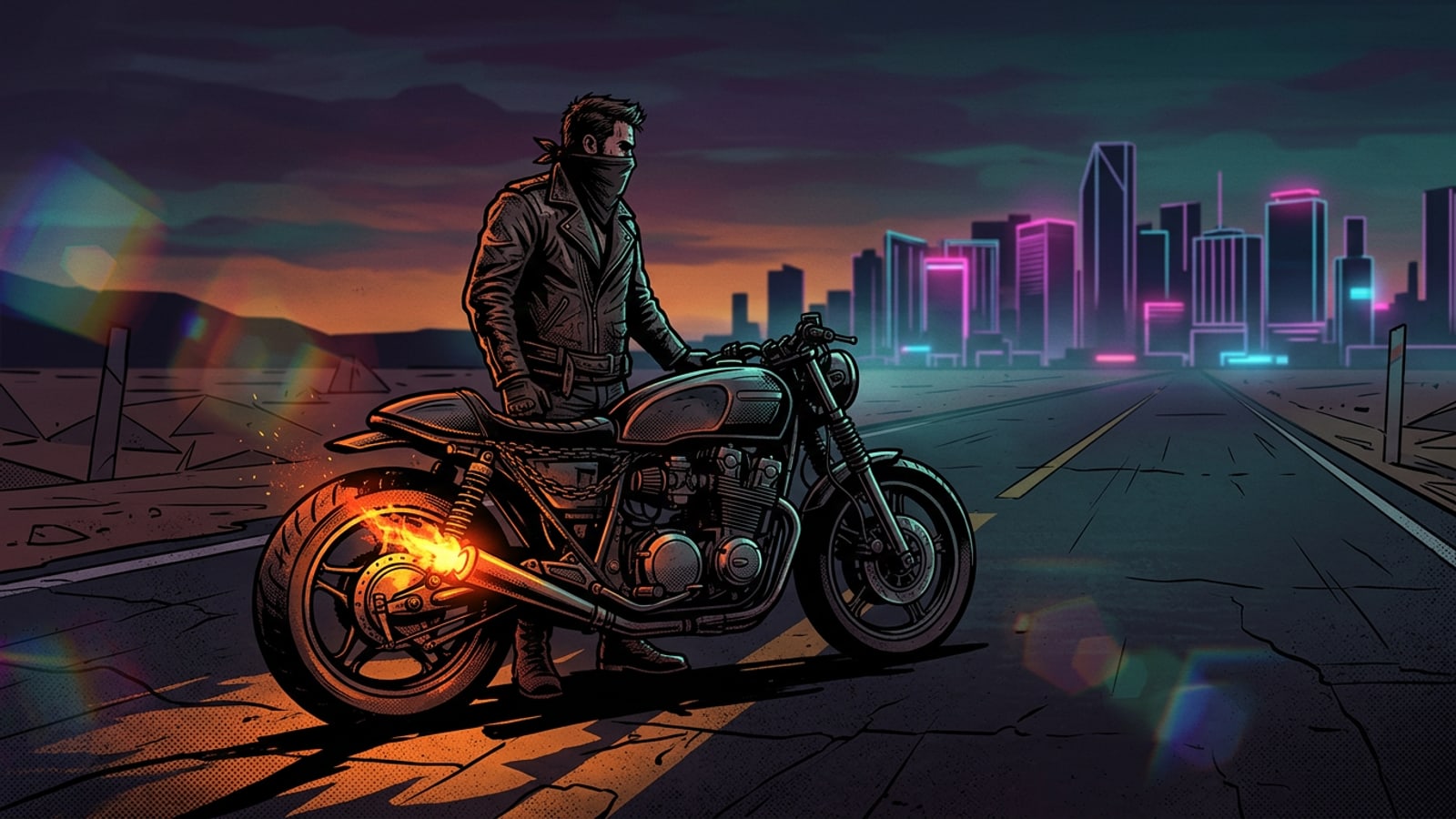
Launch CARA on iOS and select Text-to-Image Generation. Enter a detailed prompt emphasizing visual atmosphere, such as 'cinematic shot of a rugged rider beside a vintage motorcycle on a desert highway at dusk, warm glowing embers, high contrast.'
- Refine via Conversational Prompts
Use Conversational Photo Editing in CARA's Agent experience to request natural-language edits, such as 'increase twilight shadows' or 'add warm anamorphic lens flare to the motorcycle exhaust.'
- Swap Visual Elements with AI Replace
Highlight specific sections of your image using AI Replace to swap out props or change background textures cleanly using simple text commands.