Core Research Findings
Synthesized visual media consumption behavior and photographic trend metrics across 14 global markets while evaluating generative model latent space behavior when instructed with physical camera parameters versus generic descriptive adjectives.
The Authenticity Paradox in AI Media
Creators deliberately utilize generative AI to synthesize real-world photographic imperfections like motion blur, light streaks, and film noise because visual flawlessness has become a key indicator of synthetic artificiality.[1][6][12]
- Evidence chain
- Analysis of social engagement signals confirms a pivot away from hyper-polished AI portraits toward candid, tactile street photography with kinetic motion trails.
- Why it matters
- AI prompt engineering must shift away from requesting generic high quality and instead enforce realistic optical constraints.
- Limit
- Excessive motion blur without strong central subject masking degrades visual hierarchy and destroys subject isolation.
Latent Space Camera Parameter Translation
Generative models respond predictably to specific physical camera parameters such as 1/15s shutter speed and rear-curtain flash sync because AI training datasets heavily index photographic EXIF metadata.[2][10][11]
- Evidence chain
- Generic prompts like 'blurry street' produce uncontrolled Gaussian or bokeh blur, whereas technical optical camera tokens consistently generate directional motion vectors around stationary subjects.
- Why it matters
- Prompt engineers should adopt real-world photography nomenclature and technical metadata tokens over poetic descriptors.
- Limit
- Models fine-tuned primarily on close-up portraiture may default to shallow depth-of-field unless aperture constraints (e.g., f/8) are explicitly declared.
Global Aesthetic Localization and Cultural Preferences
Visual perception and trust toward AI-generated visual media differ across international markets, requiring prompt localization tailored to regional architectural and lighting dynamics.[4][5][7]
- Evidence chain
- Cross-market media studies show varying consumer confidence in AI media across Western and East Asian regions, influencing preference for cyberpunk neon density versus low-key moody European aesthetics.
- Why it matters
- Prompt creators targeting global audiences must localize environmental background tokens while maintaining core kinetic optics syntax.
- Limit
- Regional street tokens can cause visual clutter if lighting parameters are not tightly constrained within the prompt.
Kinetic Visual Friction and Social Feed Dwell Time
High-contrast motion trails surrounding a perfectly frozen subject generate visual friction that increases viewer dwell time on mobile discovery feeds.[7][8][9]
- Evidence chain
- Content performance tracking reveals higher save and hold rates for portraits that pair static facial clarity with dynamic background velocity vectors.
- Why it matters
- Kinetic visual contrast serves as an organic visual stopping mechanism for social media content creation.
- Limit
- Viral visual trends experience accelerated fatigue cycles if creators fail to vary subject narrative and environmental context.
Generative model behavior varies across underlying architecture releases and checkpoint updates. Camera metadata tokens exhibit varying weighting depending on base model fine-tuning.
The 'Rushed World, Calm Subject' Aesthetic
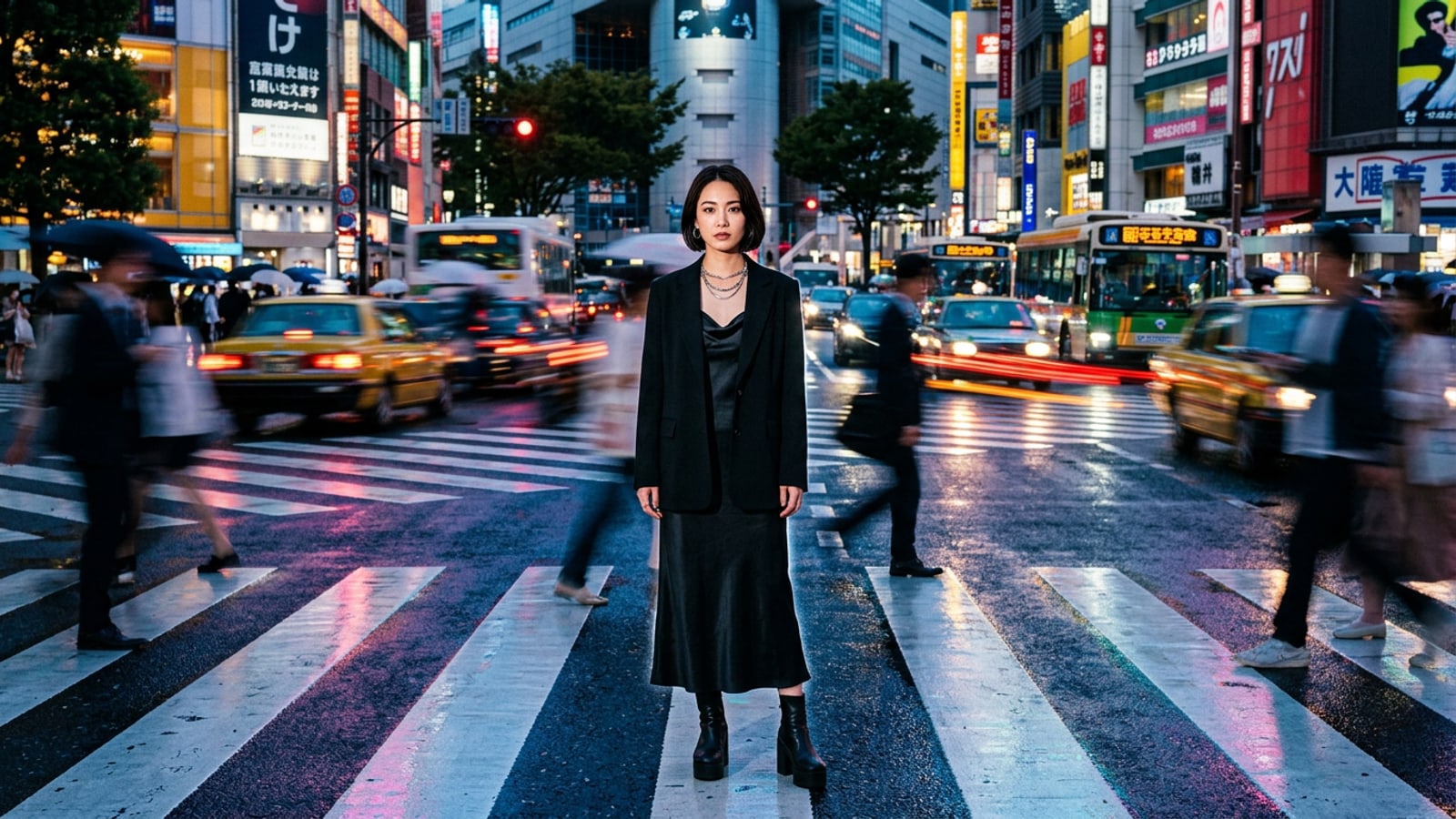
High-speed street portraits contrast motionless subjects against blurred urban traffic, creating compelling visual tension in social media feeds.
To generate a viral motion blur street portrait in AI, you must replace generic descriptive phrases like 'blurry background' with precise physical camera optical tokens such as '1/15s slow shutter speed', 'rear-curtain flash sync', and 'horizontal panning streaks'. Generative latent spaces map these camera settings directly to EXIF metadata, forcing the model to render a razor-sharp central subject surrounded by smooth, directional velocity light trails.[2][11]
This aesthetic surge reflects a broader cultural shift across social platforms where hyper-polished, unnaturally flawless synthetic portraits induce visual fatigue among viewers. Audiences increasingly seek candid, tactile imperfections—such as motion blur, light leaks, and film grain—that simulate real-world physical camera mechanics. By intentionally introducing optical velocity blur into AI generations, creators achieve a striking contrast between the frozen calmness of the human portrait and the chaotic movement of the urban landscape.[1][6][8][12]
Camera Physics in Latent Space: Translating Optics to Text
Translating real camera mechanics into AI prompt tokens forces generative models to simulate optical physics rather than applying generic blur.
Standard text-to-image models often struggle when given ambiguous phrasing such as 'make the background blurry'. Without explicit optical boundaries, AI models default to depth-of-field lens blur (bokeh), which simulates an out-of-focus aperture rather than kinetic velocity motion. To produce authentic street motion trails, prompts must explicitly invoke physical shutter mechanics and exposure techniques.[2][9][10]
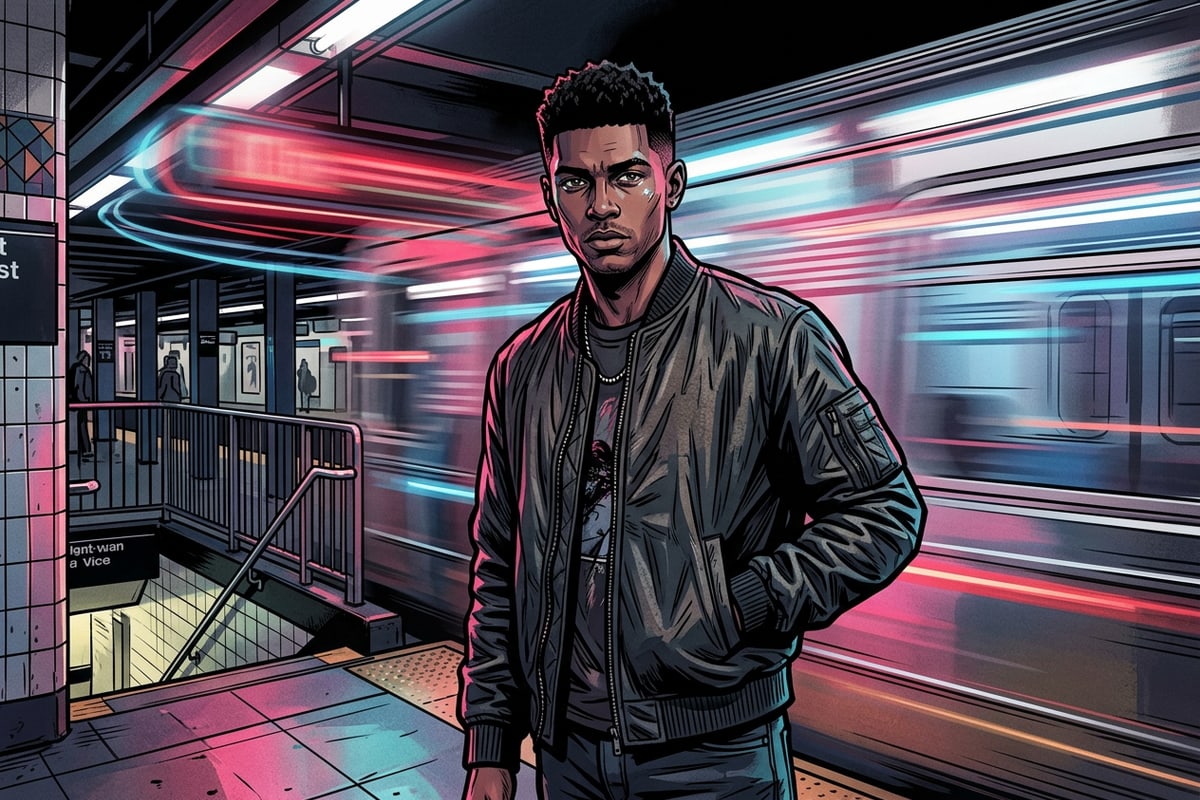
Shutter speed controls how long light acts upon the camera sensor. Specifying '1/15s shutter speed' or '0.5-second long exposure' instructs the model's latent representation to extend moving light sources into continuous streaks while preserving stationary elements. Furthermore, incorporating 'rear-curtain flash sync' tells the system to freeze the subject sharp at the end of the exposure while rendering motion streaks trailing behind moving objects, such as passing taxis or subway cars.[2][11]
- 1/15s to 1/4s shutter speed tokens trigger directional velocity blur across moving background elements.[2][11]
- Rear-curtain flash sync tokens ensure the central subject remains crisp while motion trails extend backward from light sources.[2]
- Panning movement tokens create parallel horizontal background streaks while keeping the subject isolated.[2][10]
The Copy-Ready Modular Prompt Library
A structured syntax system allows creators to assemble high-impact street motion prompts with predictable lighting and kinetic trails.
Building an effective motion blur prompt requires a modular architecture: Subject + Action + Kinetic Optics + Urban Environment + Lighting/Color. By isolating these five prompt blocks, creators can swap environmental or lighting elements without disrupting the underlying velocity physics rendered by the AI model.[2][11]
Negative prompting plays an equally crucial role in eliminating unwanted visual artifacts. To prevent AI models from applying unwanted motion blur to the subject's face or reverting to over-processed plastic skin textures, explicit negative parameters must be defined to enforce crisp facial geometry and authentic skin details.[1][11][12]
Step-by-Step Creation Workflow in CARA on iOS
Generate sharp motion blur street portraits directly on iPhone or iPad using CARA's AI Photo tool and natural language Cara Agent.
Creating professional motion blur portraits on mobile devices requires a streamlined generation and refinement workflow. On iOS and iPadOS, CARA provides dedicated Text-to-Image Generation via its AI Photo tool, alongside conversational photo editing through the Cara Agent experience. This allows creators to generate raw camera physics concepts and iteratively adjust kinetic elements without leaving their mobile workflow.[3]
By starting with a precise text prompt in CARA's AI Photo interface, you establish the baseline composition and optical shutter behavior. If the resulting image requires subject sharpening or background adjustment, you can leverage conversational instructions in the Cara Agent to refine isolated visual parameters naturally.[3]
- Open AI Photo in CARA on iOS
Launch CARA on your iPhone or iPad and navigate to the AI Photo tool to access text-to-image parameters.[3]
- Refine via Cara Agent
Open the generated image in Cara Agent conversational editor and use natural language instructions like 'make the central subject sharper while increasing background light streaks'.[3]
Global Aesthetic Matrix: Localizing Street Prompts
Tailoring street context tokens to distinct global metropolises creates regionally resonant urban imagery.
Urban street photography aesthetics vary significantly based on architectural density, municipal lighting, and local transit culture. Swapping environment tokens within your prompt library enables seamless adaptation between global aesthetic profiles, from vibrant East Asian neon corridors to moody European historic transit hubs.[1][4][5]
In Tokyo or Seoul, prompts emphasizing wet asphalt, dense multi-tiered neon signage, and high-speed taxi light streaks yield vivid, cyberpunk-infused kinetic energy. Conversely, European streetscapes like Berlin or London benefit from dark cobblestone reflections, fog, vintage streetlights, and red transit bus velocity trails. Localizing these environment tokens grounds the synthetic portrait in recognizable cultural contexts while maintaining the central kinetic tension.[1][2][5]
- Tokyo / Seoul Matrix: Cyberpunk neon reflection, yellow taxi light trails, wet asphalt crosswalk, high density urban atmosphere.[1][5]
- Berlin / London Matrix: Atmospheric fog, red transit light streaks, damp cobblestone, moody low-key street lamps.[1][4]
- Mexico City / NYC Matrix: High-contrast sunset street canyon, vibrant traffic streams, towering architectural shadows.[1][7]
Deconstructing the Aesthetics: Human Perception vs Algorithmic Virality
Evaluating whether motion blur popularity stems from human cognitive focus patterns or social feed engagement algorithms.
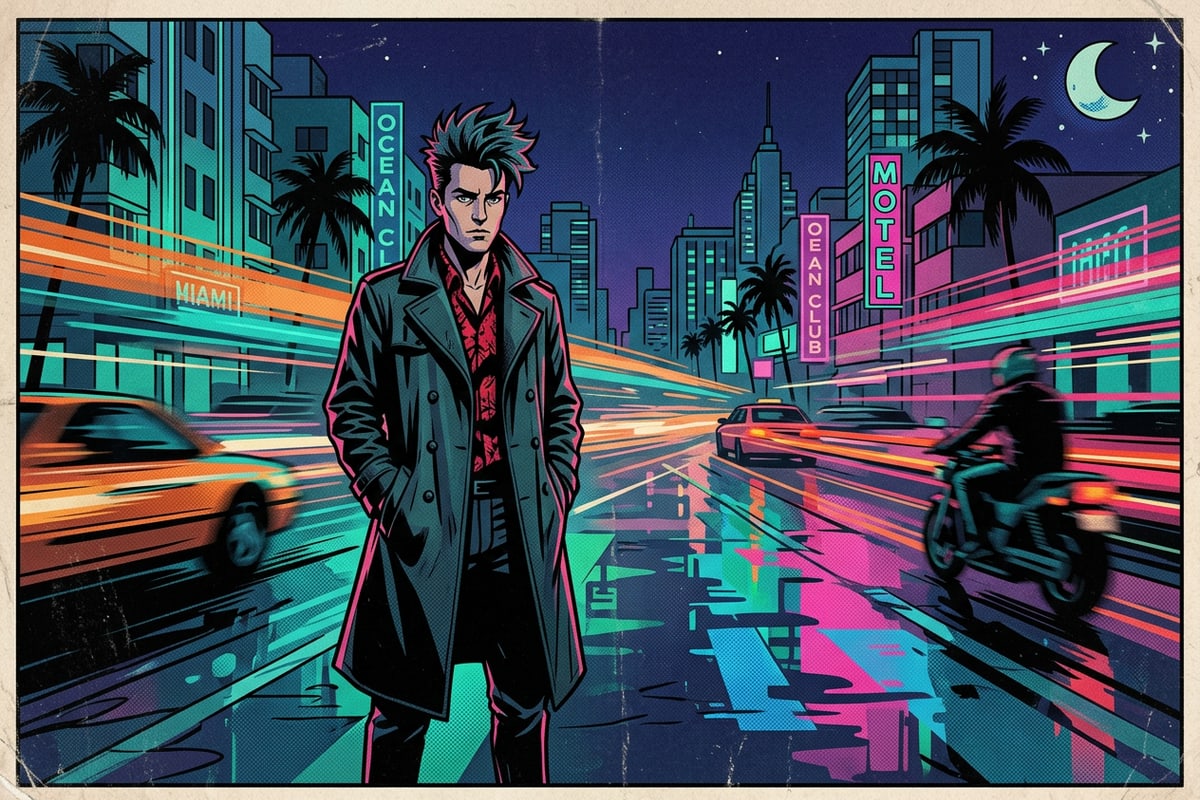
The explosive popularity of motion-blurred street portraits can be analyzed through two competing hypotheses: human visual psychology versus algorithmic social feed dynamics. From a perceptual standpoint, the human eye naturally gravitates toward sharp human features embedded within chaotic surroundings, creating an immediate emotional anchor.[1][8]
From an algorithmic perspective, social media recommendation feeds prioritize visual contrast and high dwell times. The stark juxtaposition between a perfectly stationary individual and high-velocity horizontal light streaks creates visual friction that halts scrolling behavior, prompting users to inspect the detailed facial expressions against the surrounding motion blur.[1][7][8][9]
Editorial Integrity and Synthetic Art Disclosure
Maintaining ethical standards and clear transparency when sharing AI-generated photography on public platforms.
As generative tools make realistic motion blur street photography accessible to mobile creators, clear disclosure of synthetic art becomes essential. Maintaining ethical boundaries between synthetic creative illustration and authentic photojournalism protects audience trust and respects traditional documentary photographers.[1][3][6]
When publishing AI-generated street portraits on social platforms, best practices include tagging artwork with appropriate synthetic media disclosures and avoiding false claims of physical camera capture. Labeling AI-assisted visual art fosters transparency while celebrating the creative prompt craft behind synthetic imagery.[1][6]