Key Analytical Findings
This report synthesizes official stage classifications from Amaury Sport Organisation (ASO) with reporting from Cyclingnews, The Guardian, Road.cc, Cycling Weekly, and BikeRadar. Mechanical estimates (~6.9-7.0 W/kg) reflect standardized rider-equipment weight assumptions. Disciplinary records derive from official race commissaire bulletins.
Historical Speed Shift Past 43 km/h
The 2026 Tour de France achieved a record aggregate average speed of 43.227 km/h over 3,245 kilometers, breaking all previous race speed benchmarks.[1][2][4][6]
- Evidence chain
- Stage 11 was won at a average pace of 50.91 km/h, while mountain climb times across the Alps dropped by an average of 3.2% compared to historical baselines.
- Why it matters
- Organizers and local authorities must overhaul descent barriers and crowd safety infrastructure to keep pace with modern peloton velocities.
- Limit
- Favorable wind vectors and mild ambient temperatures on transition stages contributed to high aggregate speed averages.
Climbing Physics & Power Escalation
Tadej Pogacar's 35:27 ascent of Alpe d'Huez on Stage 19 surpassed Marco Pantani's 1995 mark by 1 minute and 13 seconds.[2][5][8][9]
- Evidence chain
- Sustained power output estimates reached approximately 6.9 to 7.0 Watts per kilogram over the 13.8-kilometer climb.
- Why it matters
- Combines optimized 120g/hr carbohydrate fueling, aerodynamic frame tuning, and targeted mountain pacing into unprecedented climbing performance.
- Limit
- Power outputs are estimated based on rider body mass models and wind vectors rather than direct crank-based power meter files.
Disciplinary Optics vs. Physical Safety
Commissaire enforcement of environmental rules on Stage 20 penalized Sepp Kuss despite severe rider trauma.[2][10][11]
- Evidence chain
- Kuss received a 1,500 CHF fine and a 60-second time penalty for discarding a bottle outside dedicated green zones shortly after recovering from two separate high-speed crashes.
- Why it matters
- Demonstrates an administrative disconnect where strict ecological compliance is applied without contextual allowance for rider distress after mountain crashes.
- Limit
- Race jury decisions are administrative rulings governed by fixed UCI regulation tables without discretionary appeal windows during stage play.
This research report is limited by non-public telemetric telemetry power data and confidential testing criteria established by the International Testing Agency (ITA).
Tour de France 2026 Final Results: Pogacar Joins the 5-Win Club
Tadej Pogacar sealed his fifth general classification victory in Paris, completing the 3,245 km route in 73h 56m 26s amid a record-breaking 43.23 km/h race average.
The 2026 Tour de France concluded with a monumental milestone in professional cycling history as Tadej Pogacar claimed his fifth general classification title, matching the historic mark held by Jacques Anquetil, Eddy Merckx, Bernard Hinault, and Miguel Indurain. Pogacar sealed victory with an aggregate time of 73 hours, 56 minutes, and 26 seconds after 21 stages covering 3,245 kilometers.[1][2]
Beyond Pogacar's individual achievement, the 2026 edition set an extraordinary benchmark for overall race pace. The peloton completed the course at a record average speed of 43.227 km/h, surpassing the previous record and demonstrating the rapid technological and athletic evolution of modern grand tour racing.[1][6]
Inside the Hyper-Velocity Era: Alpe d'Huez Records and Mountain Performance
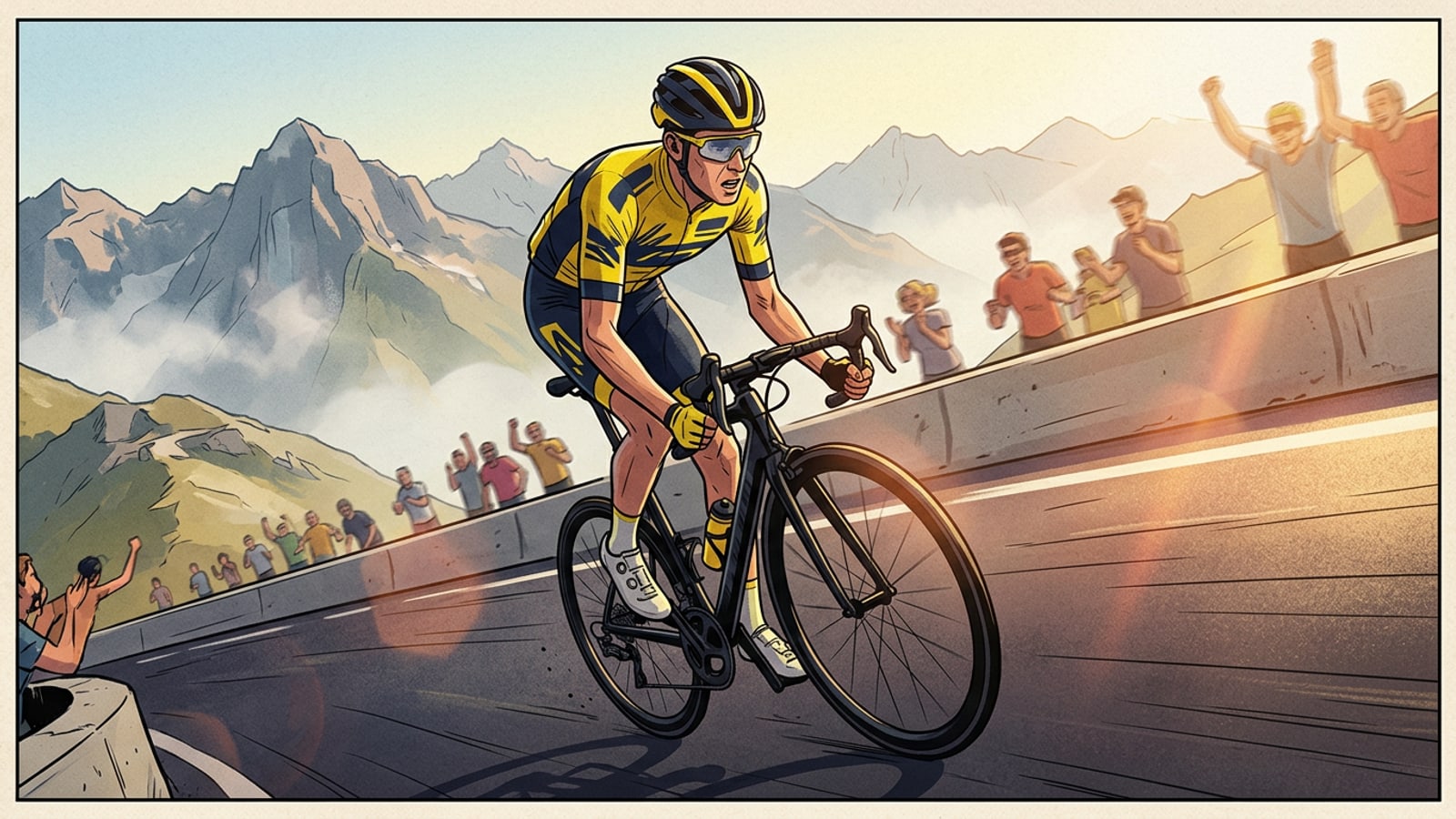
Pogacar shattered Marco Pantani's 31-year-old Alpe d'Huez climbing record on Stage 19, completing the famous ascent in 35:27.
The defining moment of the 2026 Tour de France occurred on Stage 19 during the climb up Alpe d'Huez. Tadej Pogacar completed the 13.8-kilometer ascent in 35 minutes and 27 seconds, breaking Marco Pantani's long-standing 1995 climbing record of 36 minutes and 40 seconds by a margin of 1 minute and 13 seconds.[2][5][8]
Sports science analysts calculated Pogacar's sustained power output during the climb at approximately 6.9 to 7.0 Watts per kilogram. This remarkable climbing performance was made possible by advanced nutritional strategies, including high-carbohydrate fueling protocols reaching 120 grams per hour, alongside aerodynamic equipment refinements across mountain stages.[4][5][9]
The intense pace of the 2026 edition took a heavy toll on key contenders. Jonas Vingegaard was forced to abandon the race on Stage 15 following high-speed mountain racing fatigue and crashes, reshaping the general classification battle in the final week.[2]
Super-Team Escalation and Dual-Bike Equipment Strategies
UAE Team Emirates dominated the race through super-team pacing tactics, placing young sensation Isaac Del Toro on the general classification podium.
The 2026 race highlighted the tactical supremacy of heavily capitalized super-teams. UAE Team Emirates executed a controlling strategy throughout flat and intermediate stages, maintaining peloton speeds above 50 km/h and preventing early breakaway attempts from threatening the main contenders.[1][2]
This tactical dominance enabled 22-year-old Isaac Del Toro to secure third place in the final general classification and win the White Jersey (Maillot Blanc) for best young rider, despite battling illness during the third week.[12]
Technical adjustments also played a pivotal role in stage execution. Riders deployed distinct bike setups across varying mountain profiles, combining ultra-lightweight climbing frames with high-aspect aerodynamic wheelsets to maximize watt efficiency during rapid transitions.[13]
Safety, Penalties, and the Human Element: Sepp Kuss Stage 20 Incident
A strict UCI penalty against Sepp Kuss sparked intense debate regarding judicial flexibility following severe crashes on mountain descents.
Stage 20 brought intense scrutiny to the enforcement of UCI regulations during high-stress race conditions. American climber Sepp Kuss suffered two separate falls on the dangerous descent of Col de Sarenne while attempting to protect his general classification standing.[2][11]
Shortly after remounting his bike in a disoriented state, Kuss discarded a water bottle outside the designated green disposal zones. Race commissaires strictly applied environmental rules, handing Kuss a 1,500 CHF fine, a 60-second time penalty, and a deduction of ranking points.[10][11]
The incident triggered widespread criticism from riders and commentators, who argued that commissaires showed a lack of empathy toward a rider suffering from immediate post-crash shock and physical trauma.[2][10]
Regional Breakthroughs and Doping Control Controversies
19-year-old French prodigy Paul Seixas captivated local fans with a 4th-place finish, while nocturnal testing schedules created team friction.
Nineteen-year-old French talent Paul Seixas delivered a remarkable Grand Tour debut by finishing fourth overall. After attacking on mountain stages to challenge for a podium spot, Seixas faded slightly in the final alpine time trial but earned broad acclaim across French sports media.[3][14]
Off the bike, the third week was marked by controversies surrounding nocturnal anti-doping controls. Several teams voiced frustration over International Testing Agency (ITA) officers conducting drug tests at 2:00 AM under judicial warrants, claiming the interruptions compromised rider recovery and circadian sleep cycles.[2][3]
Anti-doping authorities defended the timing, emphasizing that target controls must operate independently of race schedules when specific intelligence indicators require immediate biological sampling.[3]
Creator Workflow: Assembling High-Impact Stage Summary Graphics on iOS
Digital sports publishers can use mobile AI creative workflows on iOS to rapidly transform raw race captures into polished social media recap cards.
For sports media creators, live race coverage demands rapid visual editing workflows to capture breaking momentum on social media feeds. Using verified iOS creative tools like CARA, editors can transform raw race captures into professional recap graphics in minutes.[1]
When creating multi-rider standings or stage recaps, creators often need to remove cluttered backgrounds or style multi-photo collages without desktop publishing software. Combining conversational editing commands with automated background isolation streamlines the production of match cards and race summaries.
- Isolate Subject Cyclists with Background Removal
Import raw stage photos into CARA on iOS and tap Remove Background to cleanly separate the lead riders from busy background crowds and team vehicles.
- Compile Podium Standings in Photo Collage Maker
Select isolated rider photos and open the Photo Collage Maker. Choose a clean grid template to layout top three general classification finishers along with official stage timing data.
- Transform Race Clips into Comic Panels with Video to Manga
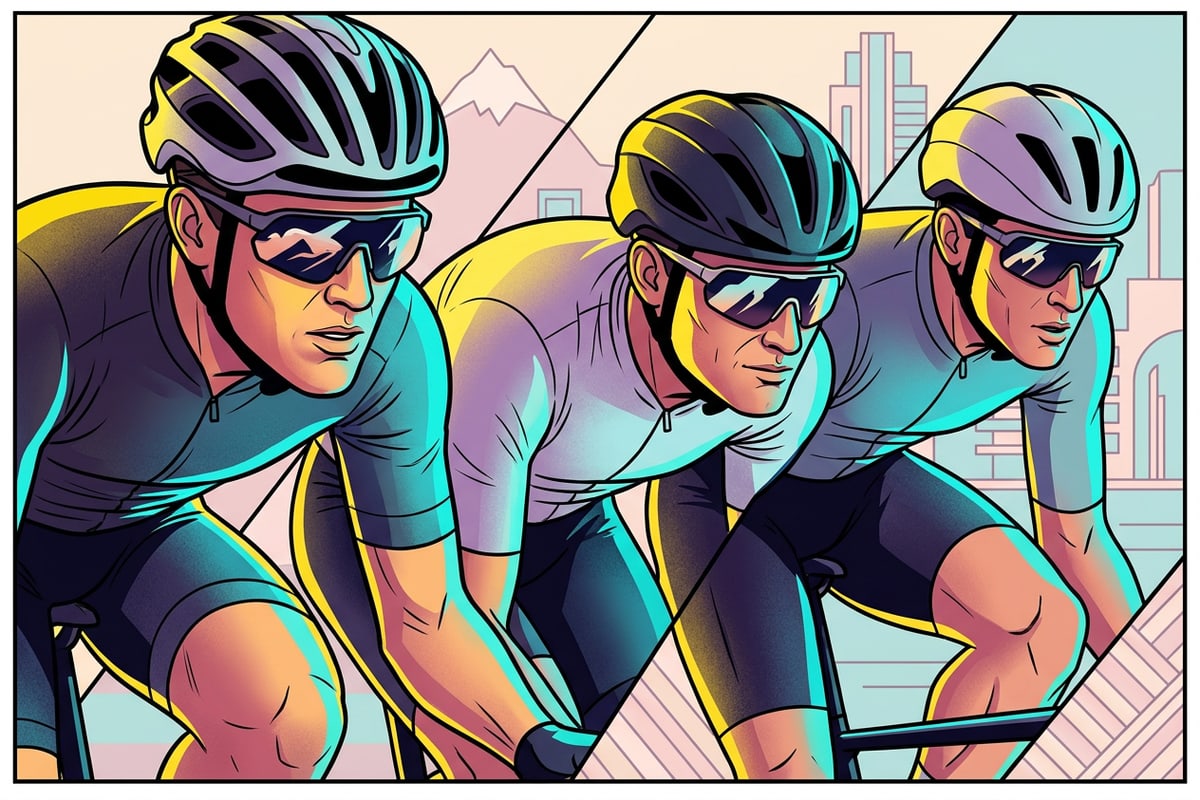
Select short video clips of high-speed mountain descents or sprint finishes and run Video to Manga to automatically convert key moments into stylized multi-panel comic recap cards.
The Future of Professional Cycling and Sports Journalism
As peloton speeds break historical bounds, race organizers face new demands for course safety and real-time digital content delivery.
The 2026 Tour de France demonstrated that professional cycling has permanently entered a hyper-velocity era. With overall average speeds exceeding 43 km/h, race organizers like ASO face growing pressure to rethink stage design, descent safety barriers, and emergency medical protocols.[3][4]
At the same time, fan consumption habits are shifting toward real-time digital recaps and visual analytics. Sports journalists and content creators who pair deep tactical reporting with rapid mobile visual workflows will lead the next generation of sports media coverage.[1]