Match Report: Lionel Messi's Historic 4-Goal Masterclass Against CF Montréal
Inter Miami delivered a commanding 7-1 victory over CF Montréal on August 29, 2026, spearheaded by Lionel Messi's four goals and one assist.
On August 29, 2026, Inter Miami achieved a landmark 7-1 victory over CF Montréal in Major League Soccer regular season competition, driven by an extraordinary four-goal and one-assist performance from captain Lionel Messi.[1][2][3]
The match marked Messi's first four-goal display in MLS, bringing his career total to 62 club hat-tricks and illustrating his continued effectiveness in front of goal during critical league fixtures.[1][2][3]
Miami's offensive fluidness proved overwhelming for Montréal's defensive setup, generating persistent goal-scoring opportunities throughout both halves of play. Similar offensive dominance in top-tier leagues offers creators an ideal subject for high-impact match breakdowns, as seen in analysis guides like the Erling Haaland Brace vs Palace Match Breakdown.[2][3]
Tactical Analysis: Set-Piece Execution and Recent Emotional Context
Messi's spatial awareness and dead-ball accuracy drove Miami's attack during a meaningful emotional period in his career.
A key component of Messi's dominant outing was his dead-ball execution, scoring direct free kicks in the 40th minute and during second-half stoppage time at 90+6 minutes.[1][2][3]
This accomplishment made Messi the 9th player in MLS history to score two direct free kick goals within a single match, demonstrating his precise trajectory control over defensive walls.[1][2]
The August 29 fixture holds significant personal context, coming shortly after the passing of his father, Jorge Messi, on August 8, 2026. This period was previously highlighted by an emotional scoring moment against Philadelphia Union on August 19, 2026.[1]
- 40th-Minute Free Kick: A curling left-footed strike placed into the upper corner.[1][2]
- 90+6 Stoppage Time Goal: Direct set-piece strike sealing the final 7-1 scoreline.[2][3]
- Recent Form Trajectory: Follows his return goal scored against Philadelphia Union on August 19.[1]

Diagnostic Visual Pipeline: Converting High-Speed Match Clips into Social Recaps
High-velocity stadium footage frequently exhibits motion blur, camera jitter, and background interference that require systematic visual correction.
Publishing professional sports content on social channels requires converting fast-paced video highlights into clear visual assets. Broadcast clips routinely suffer from digital compression artifacts, shutter distortion during player sprints, and cluttered stadium advertising banners.[2]
A diagnostic approach evaluates raw clip quality by inspecting edge contrast, subject separation against green pitch grass, and background noise. Identifying high-contrast keyframes before editing ensures that subject cutout algorithms perform with high edge accuracy.
By isolating peak action moments and rectifying lighting inconsistencies, sports storytellers can construct compelling multi-panel stories. Creators interested in converting match highlights or extensive match photo archives into clean single-page formats can review frameworks like How to Turn 50 Travel Photos into a One-Page Story on iPhone for layout inspiration.
- Shutter Distortion Inspection: Screen video frames for motion blur to find crisp freeze-frames where player posture remains sharp.
- Background Clutter Audit: Detect distracting stadium signage, LED boards, or out-of-focus referees before background removal.
- Color Contrast Calibration: Verify strong tonal separation between team uniforms and pitch turf to optimize automated selection tools.
- Sequential Frame Selection: Choose 3 to 5 key moments representing buildup, strike, impact, and celebration for multi-panel storytelling.
Step-by-Step Mobile Editing Guide for Sports Creators
Construct stylized social recap graphics on iOS using accessible AI tools and on-device canvas layers.
Mobile sports creators can process match images and video clips directly on iOS without needing complex desktop timeline software.
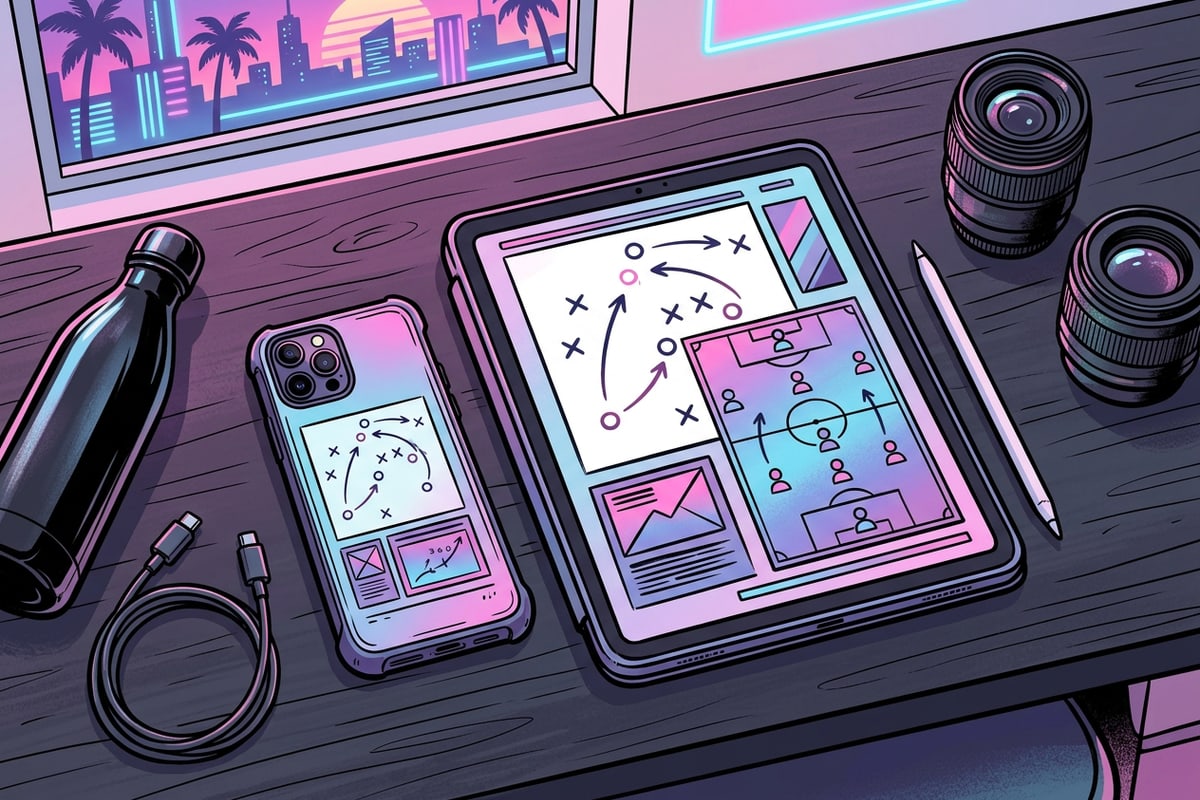
By leveraging Cara on iOS, creators can execute precise background removals, clean unwanted background artifacts, and overlay statistical graphics on a local creative canvas. For full details on turning video sequences into multi-panel graphic layouts, check out Turn iPhone Action Videos into Comic Manga Panels: Tutorial.
- Isolate Player Cutouts
Import matchday images into Cara and run Remove Background to generate crisp subject cutouts without manual boundary tracing.
- Remove Distracting Elements
Use AI Eraser to erase unwanted stadium logos, photobombers, or equipment objects from background turf areas.
- Build Graphics on Free Creative Canvas
Open Free Creative Canvas to arrange player cutouts, overlay bold statistical text, add custom shapes, and adjust text layer depths.
- Format Video Clips into Comic Layouts
Apply Video to Manga to automatically transform short action video clips into multi-panel comic book layouts for social post carousels.