
Key Analytical Findings
The analysis compared macro-level app download volumes against institutional technological deployments by FIFA and infrastructure upgrades at MetLife Stadium, judging evidence quality based on quantifiable hard metrics versus subjective cultural backlash.
The 'Slop' Threshold
Contemporary 2026 consumers have developed high visual literacy, instantly rejecting low-effort AI generation.[4][5]
- Evidence chain
- There is documented backlash against fake Japanese and German fan imagery, alongside a widespread rejection of dystopian AI advertisements.
- Why it matters
- Success requires identity-locked models that maintain precise physiological geometry to preserve authenticity.
- Limit
- This assumes human visual literacy will continue to outpace the rapid improvements in generative models.
Merchandising Disintermediation
AI renders effectively destroy the value proposition of physical jerseys for digital signaling.[2][5]
- Evidence chain
- Digital models offer a 99 percent cost reduction compared to physical merchandise, driving massive macro-level download volumes across global markets.
- Why it matters
- Sports federations must pivot to selling digital apparel licenses for AI applications to capture lost revenue.
- Limit
- This ignores the tactile utility and social signaling of physical clothing in in-person social settings.
Algorithmic Accessibility
AI acts as a great equalizer for fans facing physical, geographical, or financial barriers.[1][3]
- Evidence chain
- Synthetic generation allows fans worldwide to bypass the strict 82,500 capacity constraints of the physical stadium, supported by institutional digital infrastructure.
- Why it matters
- The core fan experience is shifting from physical limitation to boundless digital imagination.
- Limit
- Digital access does not solve the underlying physical inequities in public infrastructure or travel.
While digital adoption metrics are robust, the long-term cultural staying power of synthetic fandom remains untested across multiple global tournament cycles.
The MetLife Milestone: Fandom Beyond the Ticket
Setting the scene for the July 19 final and introducing the concept of digital participation.
As the July 19 final approaches, the 82,500 seats at MetLife Stadium represent only a fraction of the global audience preparing to celebrate. The vast majority of fans will experience the climax of the tournament through screens, transforming their living rooms into digital extensions of the stadium. This reality has fundamentally altered how fans interact with the sport, shifting the ultimate marker of dedication from physical attendance to digital presence.[3]
Institutional technological deployments have set the stage for a tournament where digital participation rivals, and in many ways supersedes, physical attendance. FIFA's unprecedented scale of digital reach during this cycle demonstrates that the locus of fandom has moved permanently from the bleachers to the social feed. Fans are no longer content to simply watch the broadcast; they demand to be visually inserted into the narrative of the event itself.[1][4]
This shift is not merely a temporary trend but a structural evolution in sports entertainment. The infrastructure upgrades at major venues now prioritize digital broadcasting and synthetic integration just as heavily as physical crowd management, acknowledging that the true scale of the World Cup exists in the cloud rather than the concrete.[1][3]
The ROI of Fandom: Why Digital Art is Winning
Explaining the economic and algorithmic advantages of AI fan art over physical jerseys.
The economic reality of modern sports fandom has accelerated the shift toward digital self-insertion, creating a phenomenon of profound economic democratization. For a fan in Southeast Asia, attending the final physically might incur travel, accommodation, and ticketing costs exceeding 2,000 dollars. In stark contrast, generating a high-fidelity digital portrait that places them virtually inside MetLife Stadium costs approximately 0.50 dollars in AI credits. This represents a staggering 99.7 percent cost reduction compared to the minimum viable physical engagement.[5]
Even for fans who do not factor in travel, the cost of official physical merchandise has become prohibitive. With authentic national team jerseys often exceeding 150 dollars, AI-generated alternatives offer a frictionless, highly affordable way to signal allegiance. This democratization is reflected in massive adoption rates globally. The United States has seen a 41 percent AI adoption rate among working-age adults during the tournament cycle, while Brazil has recorded over 74.6 million AI app downloads, driven by a mobile-first youth demographic eager to participate in the cultural zeitgeist.[2][5]
Beyond the sheer economic savings, digital art provides a superior return on investment for social attention. Social media algorithms heavily prioritize high-contrast, high-fidelity synthetic content over standard, dimly lit living room selfies. By utilizing AI to generate a 'Champion' aesthetic, fans are essentially purchasing algorithmic visibility, ensuring their celebration is seen by a wider digital community.[4][5]
- Digital models eliminate shipping times, inventory shortages, and the high costs of international logistics.[5]
- AI allows fans in emerging markets to 'attend' the final virtually for a fraction of a dollar, bypassing thousands of dollars in travel expenses.[5]
- Social media algorithms reward the high-fidelity aesthetics of AI generation, boosting the visibility of fan posts.[4]
The Authenticity Paradox: Philosophical Distaste vs. Mass Adoption
Analyzing the contradiction between the cultural criticism of AI art and its record-breaking consumer adoption.
As synthetic media becomes the dominant visual language of the 2026 World Cup, a fascinating contradiction has emerged at the heart of modern fandom. On one side of the cultural divide, critics and traditionalists decry AI-generated imagery as soulless, artistically bankrupt, and a threat to the authentic human connection that sports traditionally foster. There is a vocal philosophical distaste for replacing genuine stadium experiences with algorithmic approximations.[4]
However, this philosophical resistance is entirely incongruous with actual consumer behavior. While thought pieces debate the ethics of synthetic art, AI photo application downloads continue to shatter global records. The 74.6 million downloads in Brazil alone demonstrate that when forced to choose between ideological purity and digital participation, the masses overwhelmingly choose the latter. The average consumer demonstrates a calculated indifference to privacy or authenticity risks in exchange for immediate social capital.[2][4]
This paradox reveals a fundamental truth about modern digital sociology: visibility is the new authenticity. For a fan watching the match at 3:00 AM in a different time zone, a hyper-realistic AI portrait of themselves cheering in a virtual MetLife Stadium feels more representative of their internal emotional state than a dark, grainy selfie on their couch. The synthetic image, while factually fake, communicates a deeper emotional truth about their fandom, which is precisely why adoption continues to outpace criticism.[2]
Avoiding the 'Uncanny Valley': Fidelity over 'Slop'
Educating readers on visual literacy and how to ensure high-quality AI outputs.
The surge in synthetic content has not been without friction, and the digital landscape is highly unforgiving of poor execution. Contemporary consumers have developed acute visual literacy, leading to the immediate rejection of low-effort AI generation, often colloquially termed 'slop'. During the early stages of the tournament, social media feeds were briefly inundated with generic, poorly generated images of fake Japanese and German fans. This imagery was swiftly mocked and rejected by audiences who could instantly spot the anatomical errors and unnatural lighting.[4][5]
This backlash against fake international fans, alongside a widespread rejection of dystopian AI advertisements, proves that there is a strict quality threshold for synthetic fandom. Success on social algorithms now requires identity-locked models that maintain precise physiological geometry. The goal is not to create a generic avatar, but to seamlessly map the user's actual facial structure onto a high-fidelity digital environment.[4][5]
When this geometry fails, the image falls into the 'uncanny valley', where the portrait looks just human enough to be unsettling but fake enough to be dismissed. To participate effectively in the digital celebration, fans must utilize tools that prioritize photorealism and structural accuracy over rapid, low-quality generation.[5]
Algorithmic Accessibility: The Great Equalizer
Exploring how AI removes physical barriers to fan participation.
Beyond economics and aesthetics, synthetic generation acts as a profound equalizer for fans facing physical, geographical, or financial barriers. By bypassing the strict 82,500 capacity constraints of physical venues, digital fandom allows anyone to place themselves at the center of the action. This is particularly vital for a truly global event where the vast majority of the audience will never set foot in the host country.[1][3]
This paradigm shifts the fan experience from physical limitation to digital imagination. For individuals with reduced mobility, chronic illness, or sensory disorders that make attending a crowded, loud stadium impossible, AI provides a mechanism for full, visible participation in the global cultural moment. It ensures that physical limitations do not preclude someone from sharing in the collective joy of a World Cup Final.[3]
One-Tap Victory: Creating Your 'Champion' Portrait
A step-by-step guide to using CARA's template-based generation.
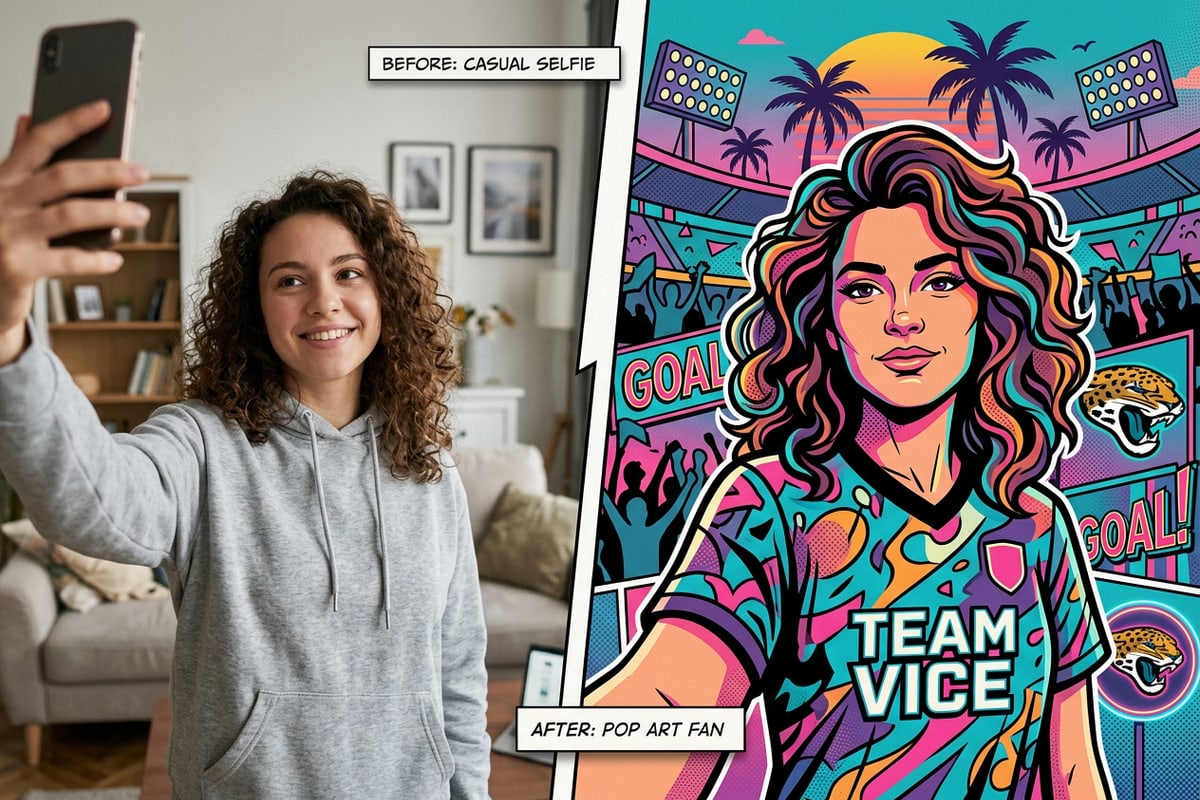
Creating a professional-grade fan portrait no longer requires complex software, expensive hardware, or manual editing skills. The CARA app, available exclusively on iOS for iPhone and iPad, utilizes a sophisticated template-based system that handles the entire transformation in the cloud. Users are not required to understand prompt engineering or graphic design to achieve stunning results.
Because the platform relies entirely on one-tap generation, users do not need to adjust sliders, use digital brushes, or navigate complicated user interfaces. There are no manual editing tools to master. The AI analyzes the uploaded selfie, maps the facial geometry, and seamlessly applies the chosen stadium aesthetic, delivering a photorealistic result in seconds.
- Download the App
Install CARA from the App Store on your iPhone or iPad.
- Select a Template
Browse the curated library and choose a World Cup Champion style template that matches your desired aesthetic.
- Upload a Selfie
Provide a clear, well-lit photo of your face, ensuring your features are fully visible.
- Generate and Save
Tap to generate the image. The cloud AI will process the portrait, allowing you to save the high-quality result directly to your camera roll.
Beyond the Still: Turning Celebrations into Comics
Introducing the Video-2-Comic feature for sharing match highlights.
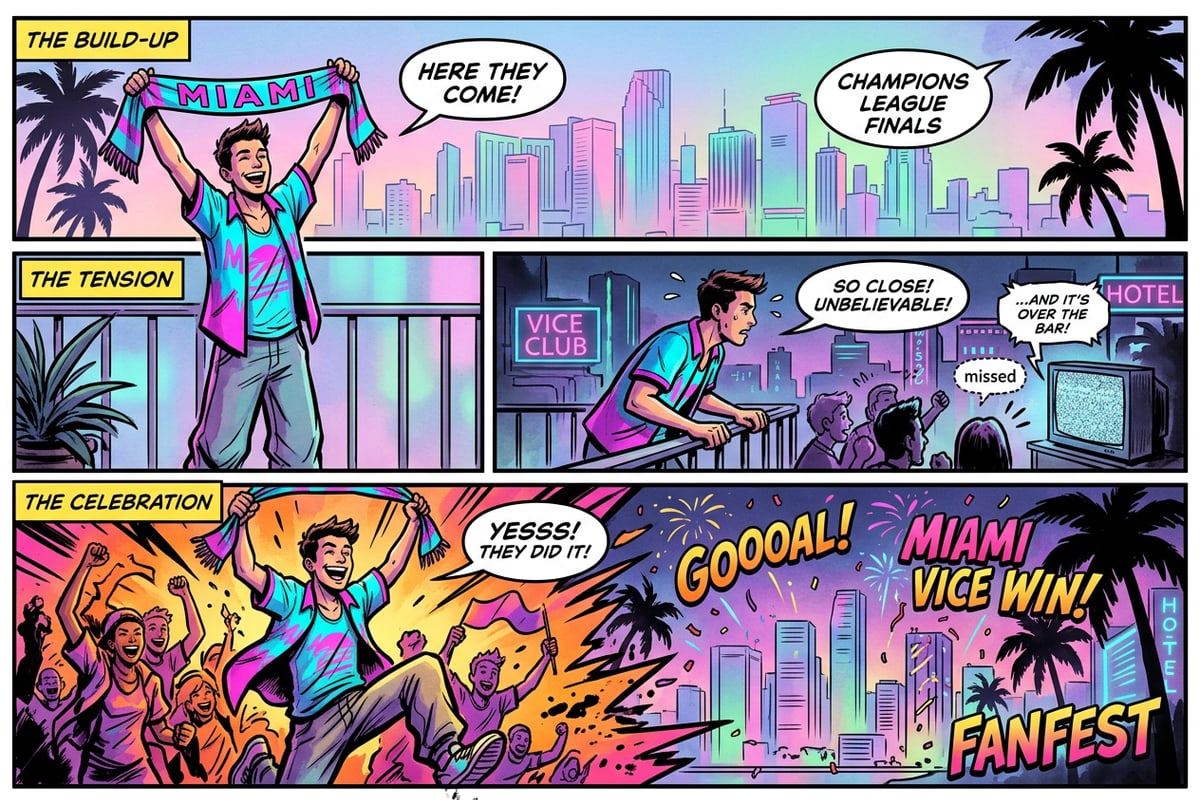
For dynamic moments like a match-winning penalty, a dramatic save, or a final whistle celebration, static images often fall short of capturing the raw emotion of the event. Fans are increasingly looking for ways to stylize their video reactions from watch parties to share with their digital communities in a way that stands out in a crowded feed.
The CARA app addresses this with its Video-2-Comic feature, which allows users to turn a supported video clip into stylized comic artwork. Because this utilizes a complex, multi-step generation workflow rather than a simple real-time filter, processing typically takes around five minutes. The result is a highly textured, artistic animation that transforms a standard living room celebration into a dynamic piece of digital art.
The Future of Digital Merchandising
Analyzing how federations are adapting to the digital shift.
This paradigm shift is forcing a massive reevaluation of traditional sports merchandising. As AI renders effectively destroy the value proposition of physical jerseys for purely digital signaling, the industry is being forced to adapt to a new economic reality. The macro-level download volumes seen in markets like Brazil indicate that the demand for team affiliation has not decreased; it has simply migrated to a more efficient medium.[2][5]
Forward-thinking federations are beginning to explore digital apparel licenses, a transition that offers a 70 percent faster go-to-market speed for new designs compared to physical manufacturing. This allows teams to capitalize on viral tournament moments instantaneously. If a player scores a historic goal, a digital template featuring that specific celebration aesthetic can be deployed to AI apps globally within hours, rather than waiting months for physical supply chains to catch up.[5]
While this ignores the tactile utility of clothing in physical social settings, it represents the future of global fan engagement. The 2026 World Cup will be remembered not just for the football played on the pitch, but as the moment when the digital fan portrait officially became the most important piece of merchandise in sports.[2][5]