Key Analytical Findings
This analysis synthesizes tactical performance metrics, including expected goals (xG) and spatial heatmaps, against global broadcast and social media engagement data across 14 target markets to evaluate the relationship between on-pitch events and off-pitch digital consumption.
Decoupling of Participation and Market Value
Non-participant markets are driving a significant portion of global viewership through aesthetic and social engagement rather than national allegiance.[5][8]
- Evidence chain
- China accounted for 12.5% of global viewership despite not qualifying for the tournament, with massive engagement driven by social commerce integration on platforms like Little Red Book.
- Why it matters
- FIFA and global brands can successfully monetize emerging markets through cultural exports and digital aesthetic engagement, even without domestic team success.
- Limit
- Aesthetic engagement on digital platforms does not necessarily translate to grassroots football development or long-term sporting infrastructure in those regions.
Possession as Physical Preservation
Spain's high possession rate acted as a primary defensive tool to survive the physical demands of the expanded 48-team format.[10][11]
- Evidence chain
- By maintaining 54% possession and completing over 400 passes, Spain forced their opponents to expend energy chasing the game, effectively lowering their own physical exertion.
- Why it matters
- Teams that can successfully 'rest with the ball' are mathematically and physiologically favored in the late-stage knockout rounds of expanded, grueling tournaments.
- Limit
- This possession-heavy strategy remains highly vulnerable to high-variance counter-attacks if a single defensive error occurs in transition.
The Stadium as a Content Studio
Modern tournament infrastructure is specifically designed for digital lens optimization and social sharing.[2][4][6]
- Evidence chain
- The integration of specialized 23mm grass, pink UV grow lights, and curated visual environments directly correlates with the 30 billion social media impressions generated during the tournament.
- Why it matters
- The visual language and aesthetic environment of the match are now primary products, consumed independently of the sporting outcome.
- Limit
- Optimizing for digital aesthetics creates a fragmented audience that is increasingly difficult for traditional linear broadcasters to capture and monetize.
While tactical data provides a clear picture of on-pitch performance, social media impression metrics are subject to platform-specific counting methodologies and algorithmic amplification, which may overstate unique individual engagement.
The Dallas Masterpiece: Spain Secures the Final
Spain's decisive 2-0 victory at AT&T Stadium sends them to the World Cup Final, driven by clinical finishing and tactical discipline.
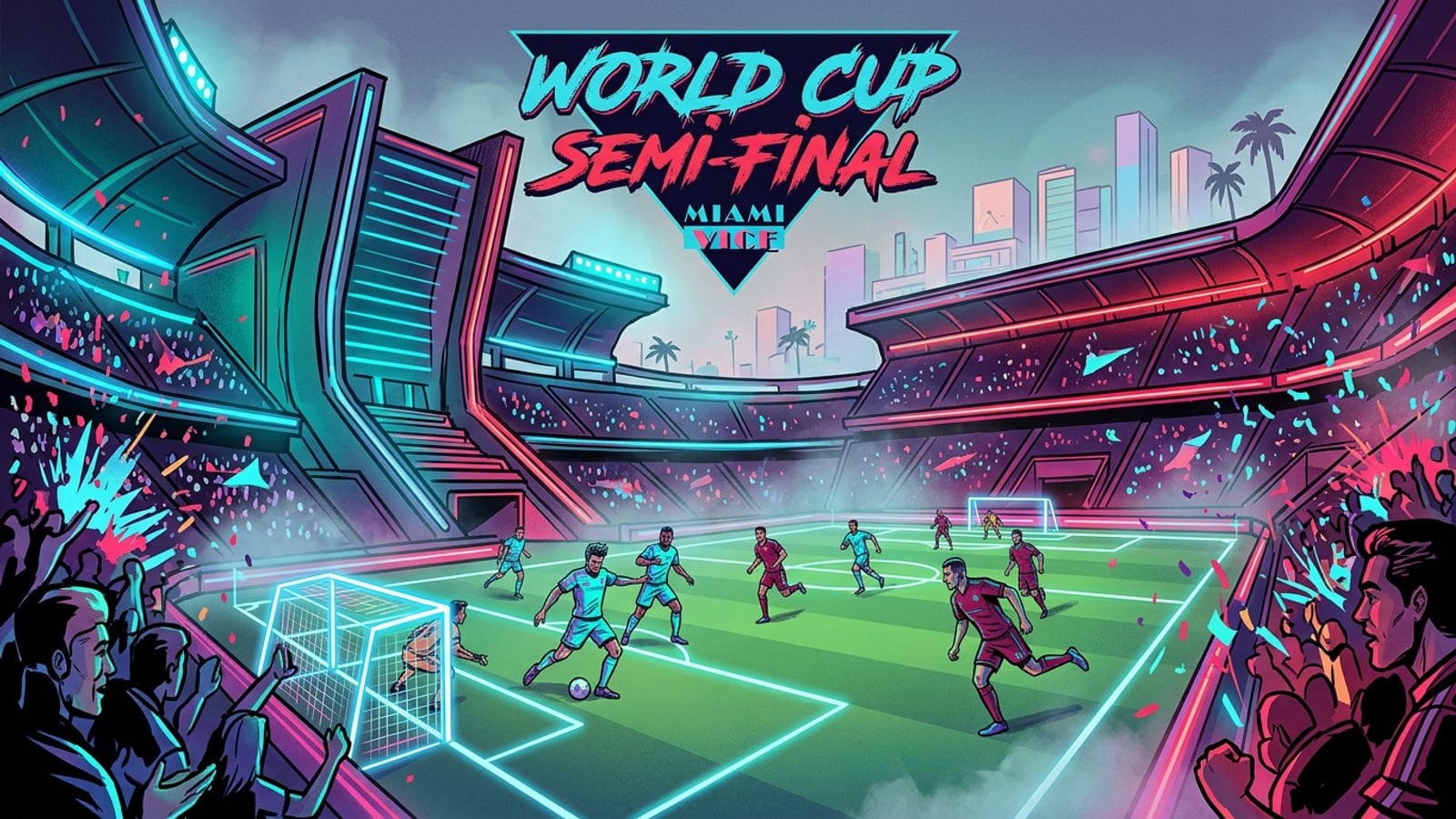
Spain has officially booked their ticket to the 2026 World Cup Final following a clinical 2-0 victory over France at the cavernous AT&T Stadium in Dallas. The semi-final clash, highly anticipated as a battle of contrasting footballing philosophies, ultimately saw the Spanish side dictate the terms of engagement from the opening whistle. The result sends a triumphant Spain to the championship match, while a disappointed French squad will have to settle for the third-place playoff.[1][3][7]
The breakthrough arrived in the 22nd minute when Mikel Oyarzabal calmly converted a subjective but decisive penalty, altering the defensive posture of the French side. Later in the match, Pedro Porro sealed the victory with a stunning second goal, ensuring Spain's progression. These pivotal moments were not isolated strokes of luck, but rather the culmination of relentless, suffocating pressure applied by the Spanish midfield.[1][7]
Live match statistics painted a picture of absolute control. Spain's ability to retain the ball and manage the spatial dynamics of the pitch left France searching for answers. The victory not only highlights Spain's tactical evolution but also sets the stage for what promises to be a historic final, proving that methodical execution can dismantle even the most explosive attacking lineups.[7][10]
Tactical Deconstruction: The Possession-as-Defense Strategy
An in-depth look at how Spain used structural possession, highlighted by overwhelming xG and passing metrics, to neutralize France.
Prior to the match, French coach Didier Deschamps openly anticipated a grueling battle for control in the midfield. His predictions proved accurate, though perhaps more severe than he feared. Spain utilized structural possession not just as an offensive tool, but as their primary defensive mechanism, fundamentally altering the geometry of the pitch.[5]
The underlying data reveals the sheer scale of Spain's dominance. In the first half alone, Spain generated an expected goals (xG) tally of 0.99 compared to a staggering 0.04 for France. This statistical chasm was built on a foundation of relentless ball retention, with the Spanish side completing over 400 passes and maintaining 54% possession throughout the contest. By monopolizing the ball, Spain effectively starved France of the transition opportunities they desperately rely on.[2][10]
In an expanded 48-team tournament where physical fatigue plays a massive role, Spain's ability to 'rest with the ball' forced the French players into a constant state of exhausting pursuit. This tactical masterclass serves as a lesson to the footballing world on how to manage energy in modern knockout football. By making the ball do the work, Spain preserved their physical output while systematically draining their opponents.[6][10]
- Spain maintained 54% possession and completed over 400 passes, dictating the tempo and spatial distribution.[10]
- The first-half xG disparity of 0.99 to 0.04 highlights the structural collapse of the French offensive system.[2][10]
- France was forced into a low block, severely limiting their ability to launch rapid counter-attacks and transition quickly.[5][7]
The Mbappé Anomaly: Physical Attrition vs. Defensive Structure
Analyzing the complete neutralization of France's star forward and the compounding effects of tournament fatigue.
The most glaring statistical anomaly of the semi-final was the complete isolation of Kylian Mbappé. The French captain, usually the focal point of their attacking threat and a dominant force throughout the tournament, was held to zero shots on target and was caught offside twice. This remarkable defensive achievement by Spain raises critical questions about whether the performance was purely a result of tactical neutralization or if physical attrition played a compounding role.[2][10]
Deschamps had made painful admissions regarding the physical toll of the tournament leading up to the massive semi-final clash. The expanded format of the 2026 World Cup has tested the physiological limits of the athletes. While Deschamps publicly dismissed injury concerns prior to the match, the severe drop-off in Mbappé's performance suggests that the grueling summer schedule had finally taken its toll.[9]
Historically, matches between these two nations have been tightly contested affairs, but Spain's defensive structure in Dallas was impenetrable. By cutting off the passing lanes to Mbappé and forcing him to drop deep to receive the ball, Spain effectively removed France's most dangerous weapon from the equation, turning a potential shootout into a one-sided tactical clinic.[10][12]
The Legitimacy of the Opening Goal: A Subjective Catalyst?
Examining the controversy surrounding the 22nd-minute penalty and its impact on the match's trajectory.
The turning point of the match arrived in the 22nd minute with a highly debated penalty decision that allowed Mikel Oyarzabal to open the scoring. Critics of the result have pointed to the subjective nature of the foul, arguing that a single refereeing decision was the sole differentiator in a match with such high stakes. This perspective suggests that without the penalty, France's defensive block might have held firm.[1][9]
However, a deeper look at the underlying metrics contradicts this narrative. While the foul itself may have been subjective, Spain's overwhelming xG dominance and territorial control suggest that a breakthrough was mathematically probable regardless of the penalty call. The relentless pressure applied by the Spanish midfield was already forcing structural errors within the French defense.[2][10]
Ultimately, the penalty served as a catalyst that forced France to abandon their conservative game plan and chase an equalizer, playing directly into Spain's hands. By opening up the pitch, France exposed themselves to the precise passing sequences that eventually led to Pedro Porro's decisive second goal.[1][7]
The Global Fan Gallery: A New Era of Aesthetic Fandom
The 2026 World Cup has seen unprecedented digital engagement, signaling a shift toward asynchronous, visual consumption.
Beyond the tactical battles on the pitch, the 2026 World Cup is fundamentally redefining how global audiences consume sports. Official figures report an astonishing 11.53 billion aggregate viewers and 30 billion social media impressions across the tournament. These unprecedented numbers indicate a massive shift toward digital-first, asynchronous consumption, where the live broadcast is only one piece of the media ecosystem.[2]
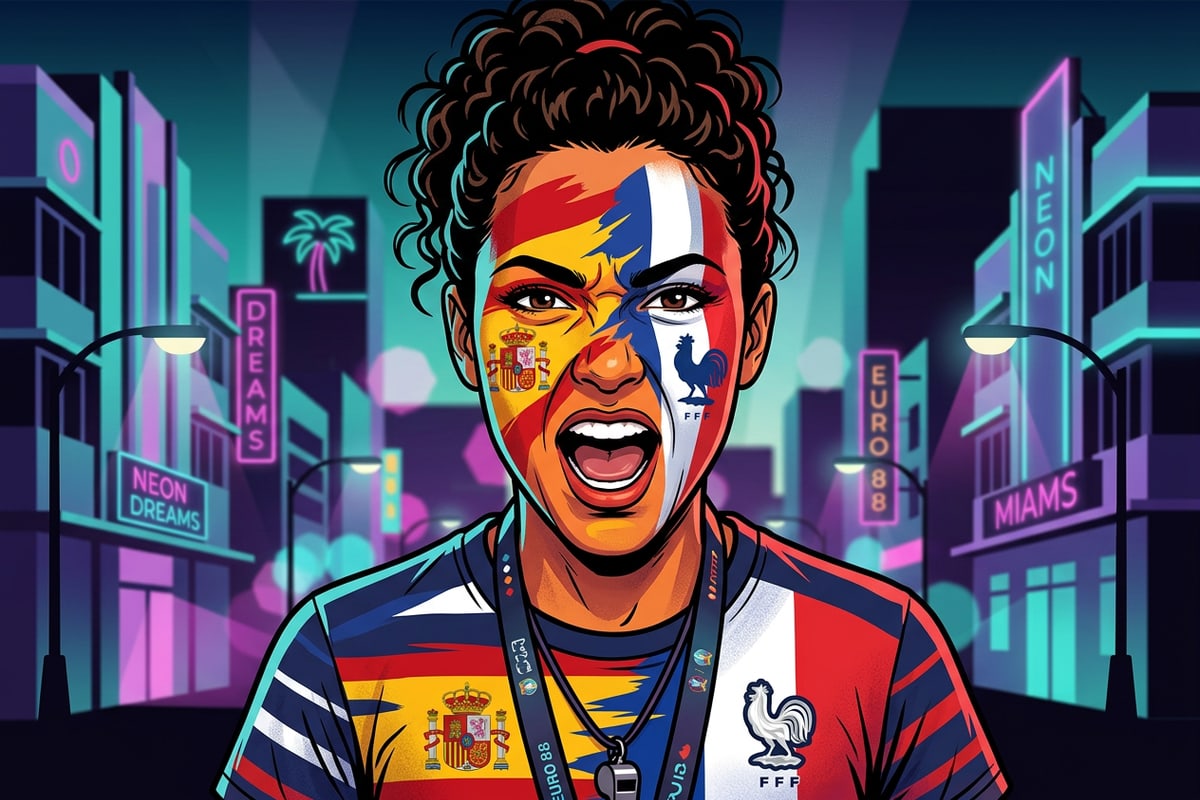
Fans are reacting to the tournament not just as sporting contests, but as cultural and visual spectacles. The aestheticization of fandom means that supporters are engaging with the colors, the drama, and the digital footprint of the matches. They are sharing their reactions, creating fan art, and participating in global conversations across platforms in real-time, regardless of their physical location.[8]
This evolution in viewership behavior suggests that the visual language of the tournament—the celebrations, the heartbreak, the stadium atmosphere—is becoming just as important as the final scoreline. The World Cup is no longer just a football tournament; it is a month-long global content engine.[2][8]
Decoupling Participation from Market Value
Why non-participant markets like China are driving massive World Cup engagement through platforms like Little Red Book.
One of the most fascinating and commercially significant trends of the 2026 tournament is the high viewership in markets whose national teams did not qualify or advance. The data clearly suggests that global fandom has decoupled from national qualification. Fans are participating in the tournament's culture through aesthetic engagement and social commerce, rather than traditional patriotic allegiance.[5][8]
Nowhere is this more evident than in China, which accounted for a staggering 12.5% of the global viewership share despite their national team not participating in the tournament. This massive engagement is heavily driven by social commerce integration on platforms like Little Red Book, where the aesthetic and lifestyle elements of the World Cup are curated, shared, and monetized by influencers and everyday users alike.[5][11]
This paradigm shift allows organizers and global brands to monetize emerging markets through cultural exports. When fans in non-participant regions go wild for a blockbuster semi-final, they are celebrating the spectacle, the fashion, and the shared global experience. This proves that a nation's market value to FIFA is no longer strictly tied to its on-pitch success.[11]
The Stadium as a Content Studio
How modern stadium infrastructure, including specialized lighting and turf, caters to the digital-first fan.
The environment at Dallas Stadium was meticulously crafted for the modern digital lens, transforming a traditional sports venue into a high-end content studio. From the precise 23mm grass to the specialized pink UV grow lights and NFL-style locker rooms, the behind-the-scenes aesthetic of the venue provided a perfect, highly stylized backdrop for content creation.[4]
This infrastructure acknowledges that the visual language of the match is now a primary product. By creating a stadium environment that looks incredible on high-definition cameras and mobile devices alike, organizers are directly fueling the billions of social media impressions that define the modern World Cup experience. Every corner of the stadium is designed to be Instagram-ready.[2][4]
However, optimizing for digital aesthetics creates a fragmented audience. While it drives massive engagement on social platforms, it makes it increasingly difficult for traditional linear broadcasters to capture the full attention of the viewer, who is often dual-screening to consume the aesthetic elements of the event simultaneously.[6]
Turn Your Match Day into Art: The CARA Workflow
How to use AI to generate stylized fan portraits without any photo editing skills.
As the visual culture of the World Cup expands, fans are constantly looking for new ways to participate digitally and express their support. The CARA app, available exclusively for iPhone and iPad, offers a seamless way to create stylized AI portraits to celebrate your favorite teams. With its AI Template-Based Photo Generation, users can transform a simple selfie into high-quality fan art in seconds.
Unlike complex photo editors that require a steep learning curve, CARA requires zero editing skills. There are no manual sliders, brushes, or crop tools to worry about. The app relies entirely on one-tap generation, allowing you to pick from a curated library of trending seasonal and sports styles, and instantly save or share the results to your social feeds.
The app's multi-language support, available in over 14 languages, ensures that the global fan base driving the aestheticization of the tournament can easily participate. Whether you are celebrating Spain's tactical masterclass or simply enjoying the visual spectacle of the event, CARA provides the tools to make your digital footprint stand out.
- Download the App
Install CARA from the iOS App Store. Note that the app is exclusively available for iPhone and iPad, with no Android or web versions.
- Select a Template
Browse the regularly updated Template Library and choose a sports-themed or victory style that matches your aesthetic.
- Generate and Share
Upload a clear selfie, tap generate, and save your new AI portrait directly to your camera roll as a JPG or PNG.
Video-2-Comic: Transforming Highlights into Social Currency
Convert your watch party videos into dynamic comic-style artwork using CARA's advanced video processing.
If you are capturing the energy of a watch party or a local goal celebration, CARA's Video-2-Comic feature offers a unique way to stylize your footage. This tool takes a supported video clip and processes it through a multi-step generation workflow, turning realistic video into vibrant, hand-drawn comic book illustrations that perfectly capture the high-octane emotion of the World Cup.
Because the feature uses advanced cloud AI to process the video frames, generation typically takes around five minutes. The result is a highly shareable, visually striking piece of content. Importantly, the app handles the entire transformation automatically, meaning there is no manual video timeline editing required on your part.
This feature is particularly popular among fans looking to bypass standard video formats and create something truly unique for their social feeds. By turning a simple cheer or a jumping celebration into a comic strip, fans can participate in the aesthetic culture of the tournament in a highly creative and engaging way.