Key Analytical Findings
This report synthesizes global AI adoption metrics contrasted with historical narrative data and legal precedents regarding machine authorship to understand the shift in digital sports fandom.
The Anthropocentric Premium
Fans enthusiastically use AI for personal expression but fiercely reject it when used by official brands for cost-cutting.[5][11]
- Evidence chain
- High global enthusiasm for personal AI tools contrasts sharply with the demand for authentic, human-centric narratives in sports media.
- Why it matters
- Brands must position AI as a tool for fan empowerment and co-creation, rather than a replacement for human designers.
- Limit
- The line between 'fan art' and 'brand content' is blurring as tools improve.
The Infrastructure-Application Paradox
The US leads in AI infrastructure development, but smaller, highly digitized economies lead in daily consumer usage.[10][11]
- Evidence chain
- US adoption sits at 31.3%, while emerging markets like Vietnam show a 61.3% enthusiasm rate and South Korea exhibits massive growth.
- Why it matters
- Cultural dominance in the AI era will be determined by application and participatory creation, not just backend infrastructure.
- Limit
- The available data excludes specific mobile operating system splits in emerging markets.
The Copyrightability of Conversational Art
Iterative, conversational editing provides the human authorship necessary to potentially secure IP rights.[12][13]
- Evidence chain
- While the US Copyright Office denies copyright for pure machine authorship, digital platforms scale human-directed AI art regardless of legal status.
- Why it matters
- Creators should use conversational tools to establish meaningful human involvement in their digital art.
- Limit
- Legal precedents regarding AI authorship are still evolving globally and may change.
This report relies on early 2026 adoption metrics and evolving copyright law; user behavior and legal standards may shift rapidly.
The 20-Year Narrative: A Viral Meme Meets a Dream Match-Up
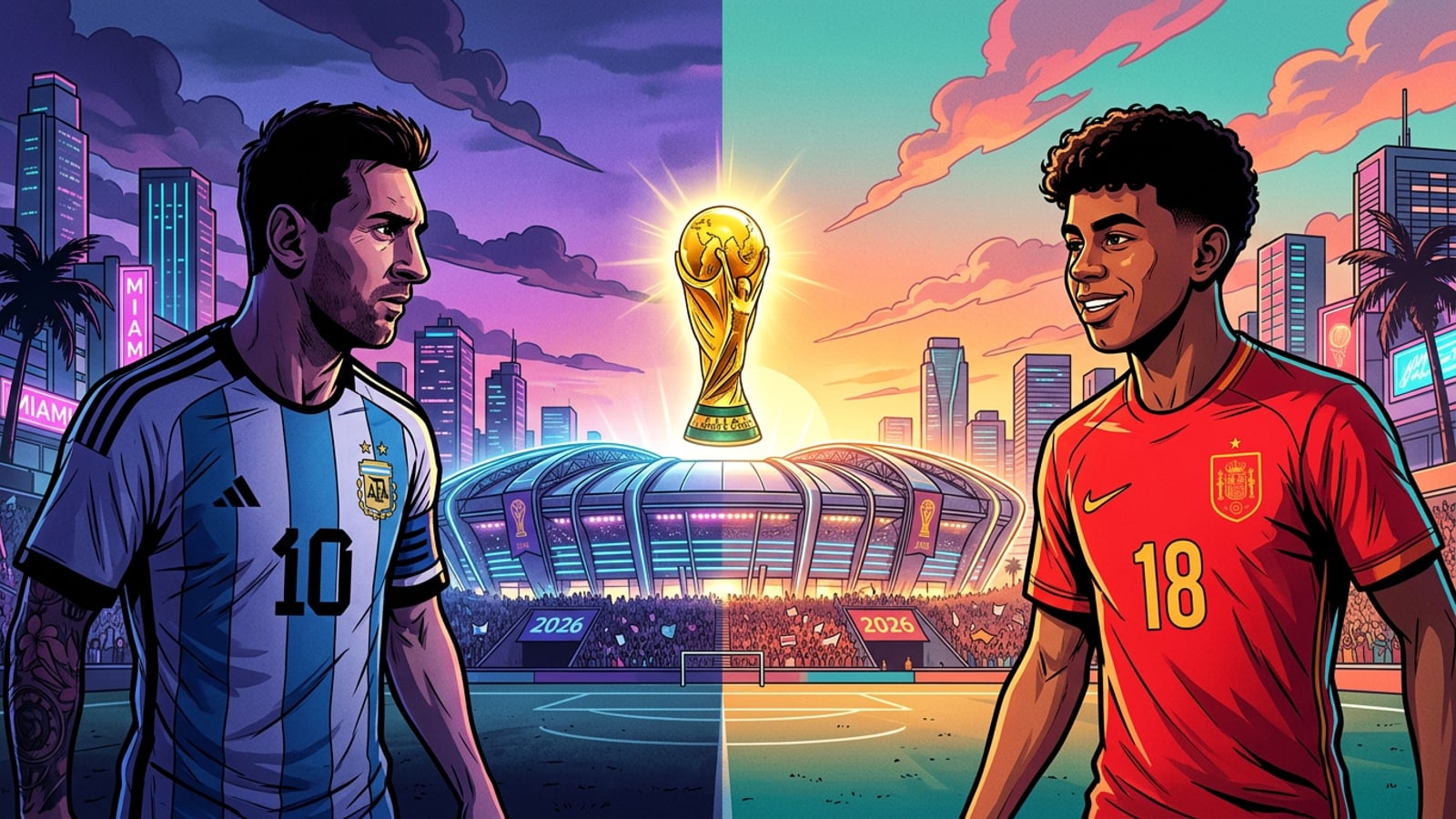
The emotional stakes of a hypothetical Argentina vs. Spain final are rooted in a widely circulated, though unconfirmed, 2007 photoshoot narrative.
A potential 2026 World Cup final between Argentina and Spain is not just a clash of footballing titans; it could be the culmination of a narrative two decades in the making. The story begins in 2007, when a 20-year-old Lionel Messi participated in a UNICEF charity calendar photoshoot. In a serendipitous moment captured on film, Messi bathed a six-month-old baby in a small plastic tub. A viral narrative suggests that the baby was Lamine Yamal.[1][2]
While this is a widely circulated meme and remains an unconfirmed story, the symbolism is impossible for fans to ignore. If this dream match-up occurs, Yamal, having just celebrated his 19th birthday, could lead Spain into a hypothetical final at MetLife Stadium against the very man featured in that famous bathtub photo. The numerological coincidences run deep, from their shared connection to the number 19 jersey to the historic July 19 date of the final itself.[4]
This imagined passing of the torch has electrified global audiences. It is a storyline so perfectly scripted that it feels cinematic, driving an unprecedented demand for visual content that captures the emotional weight of the potential matchup. Fans are no longer satisfied with standard broadcast graphics; they want to visualize the poetry of this speculative generational collision.[2][4]
Why AI Fan Art Dominates the 2026 World Cup Conversation
Fans are shifting from passive consumption of official merchandise to active creation of personalized digital art for dream scenarios.
The lead-up to the 2026 World Cup marks a paradigm shift in how audiences interact with major sporting events. Historically, fans expressed their allegiance by purchasing official merchandise or sharing broadcaster-created graphics. Today, participatory, human-directed conversational art is replacing traditional merchandise as the primary mode of fan engagement, especially for highly anticipated, hypothetical matchups.[5]
With internet users topping 6 billion and AI users passing a billion globally, the tools for high-quality digital creation are more accessible than ever. Fans are leveraging these platforms to bypass generic corporate graphics and reclaim the narrative, visualizing the games they most want to see.[12]
They are generating highly specific, emotionally resonant images that reflect their personal connection to the sport, fundamentally subverting legacy media control and establishing a new standard for digital sports fandom.[5]
The Infrastructure-Application Paradox in Sports Fandom
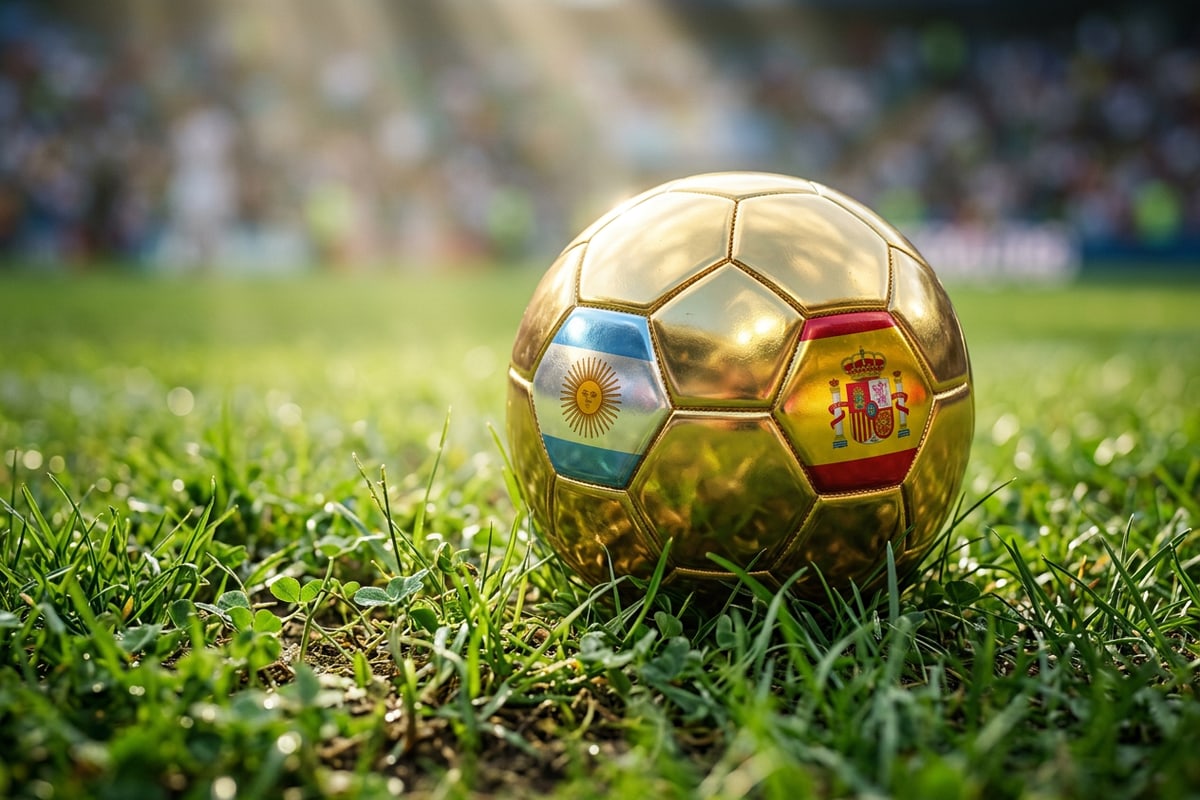
Emerging markets are leading the charge in consumer AI application, outpacing regions with heavier AI infrastructure.
While the United States leads the world in AI infrastructure development, the cultural impact of AI in sports fandom is being driven by smaller, highly digitized economies. This infrastructure-application paradox reveals that cultural dominance in the AI era is determined by daily consumer usage rather than backend development.[10]
For example, US consumer adoption of AI tools sits at 31.3%. In contrast, emerging markets are showing massive enthusiasm for these technologies. Vietnam boasts a staggering 61.3% enthusiasm rate for AI, while South Korea has seen a 43.2% growth in consumer AI application.[10][11]
This global democratization of creative tools means that a fan in Hanoi or Seoul has the same ability to produce professional-grade World Cup visuals as a graphic designer in New York. The barrier to entry has been obliterated, leading to a vibrant, diverse explosion of fan-created content that reflects a truly global perspective on the tournament.[11]
Global Aesthetics: How to Prompt for Your Market
Tailoring your AI prompts to specific regional aesthetics can make your fan art resonate more deeply with local audiences.
Because AI fan art is a global phenomenon, the most successful creators tailor their visual output to specific regional aesthetics. A prompt that works well for a European audience might not carry the same emotional weight in Latin America or Asia.[10]
In Latin American markets, there is a strong preference for folkloric pride. Prompts that incorporate vibrant colors, emotional intensity, and cultural symbols tend to perform best. Conversely, European markets often lean toward minimalism, favoring clean lines, dramatic lighting, and subtle storytelling.[10]
In South Korean and Japanese markets, hyper-stylized, dynamic compositions that echo manga and anime aesthetics are incredibly popular. Understanding these nuances allows creators to craft prompts that generate highly localized, culturally resonant artwork for their dream matchups.[10][11]
Step-by-Step: Creating Your Dream Poster with CARA
Use the CARA app's conversational AI and text-to-image features to generate a custom, hypothetical Argentina vs. Spain match poster.
Creating your own professional-grade World Cup poster no longer requires complex software or years of design experience. The CARA app allows you to generate and refine images using natural language, turning your ideas into striking visuals in seconds.
By leveraging CARA's Text-to-Image Generation and Conversational Photo Editing capabilities, you can bypass the generic AI content that floods social media. Instead, you can direct the AI to focus on the specific narrative elements of a speculative Messi vs. Yamal showdown.
- Generate the Base Image
Open CARA and use the Text-to-Image Generation feature. Enter a detailed prompt, such as: 'A cinematic, dual-perspective match poster for a hypothetical 2026 World Cup Final. On the left, a legendary veteran player in a blue and white striped kit stands in a shadow. On the right, a teenage prodigy in a vibrant red kit stands in bright sunlight.'
- Refine with Conversational Editing
Once the base image is generated, use CARA's Agent experience to make adjustments via natural-language requests. You can ask the AI to 'make the stadium lighting more dramatic' or 'increase the contrast between the two players.'
- Clean Up Distractions
If the AI generated any strange artifacts in the background crowd, use the AI Eraser tool to select and remove unwanted objects, keeping the focus entirely on the players.
Expanding the Canvas: MetLife Stadium and Beyond
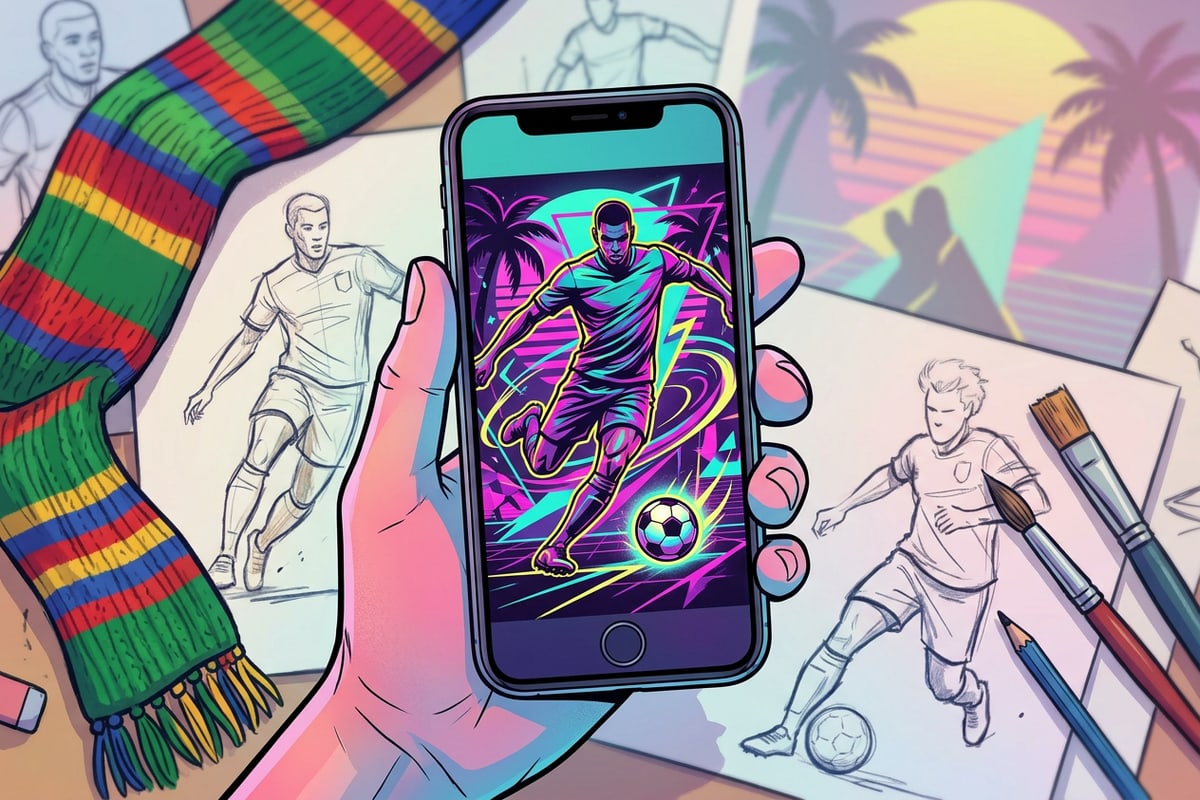
Transform standard square generations into cinematic vertical posters using CARA's Image Extender.
Social media platforms prioritize vertical content, but many AI models default to generating square images. To make your hypothetical Argentina vs. Spain poster ready for stories and reels, you need to expand the canvas without losing the quality of your original generation.
CARA's Image Extender allows you to expand an image beyond its original borders. By generating surrounding content, you can turn a tight shot of the players into a sweeping vertical view of a packed stadium. The AI analyzes the existing scene and seamlessly builds out the environment.
If you want to personalize the poster further, you can use the AI Replace feature. Select an area in the newly generated crowd and use a text instruction to add specific elements, like a giant flag or a specific type of fan banner, making the scene uniquely yours.
Beyond the Still Image: Collages and Watch Party Comics
Take your World Cup content further by creating photo grids and stylizing your watch party videos.
While a cinematic match poster is a great centerpiece for a dream matchup, the 2026 World Cup offers numerous ways to document the experience. If you are hosting a watch party or attending a local screening, you will likely capture dozens of photos and short video clips.
You can compile your favorite moments using CARA's Photo Collage Maker, which offers flexible grid layouts to organize your matchday memories without needing complex design software. For a more dynamic approach, you can stylize your video clips.
CARA's Video to Manga feature turns supported video clips into comic-style pages, automatically selecting key moments and arranging them into a panel layout. This approach not only creates highly engaging, stylized content but also offers a unique way to share the excitement of the tournament without simply posting raw, unedited footage of a crowded room.
The Legal Playbook: Copyright, Likeness, and Sharing Your Art
Understanding the legal nuances of AI-generated art ensures you can safely share and protect your creations while respecting privacy rights.
As AI fan art explodes in popularity, the legal landscape surrounding it remains complex. The US Copyright Office has firmly stated that works created entirely by machines without traditional human authorship cannot be copyrighted. However, iterative, conversational editing provides a layer of human direction and curation that may help establish IP rights.[12][13]
It is critical to consult legal professionals for definitive advice on AI art copyright, as legal precedents are still evolving globally and can vary significantly by jurisdiction. Relying solely on general guidelines could leave your work unprotected or expose you to unforeseen liabilities.[13]
Furthermore, creators must exercise extreme caution regarding potential likeness rights and privacy concerns when generating and sharing images of real public figures like Lionel Messi and Lamine Yamal. Using a person's recognizable likeness without permission, especially in a context that could be misconstrued as official or commercial, can lead to severe legal repercussions. Always ensure your fan art is clearly labeled as unofficial and transformative.[12]