The MetLife Masterclass: Spain’s Second Star
A tactical breakdown of Spain's dramatic 1-0 extra-time victory over Argentina in the 2026 FIFA World Cup Final.
The 2026 FIFA World Cup Final at MetLife Stadium delivered a masterclass in tactical discipline, culminating in Spain securing their second global title with a hard-fought 1-0 victory over Argentina after extra time. The match was a grueling chess encounter between two footballing philosophies, with Spain's possession-oriented system ultimately wearing down the defending champions over 120 minutes of intense play.[6][7]
The defining moment of the match arrived in extra time when Ferran Torres found the back of the net, breaking the scoreless deadlock and sending Spanish fans into absolute euphoria. Spain's tactical patience paid off as they consistently looked to exploit gaps in the Argentine defensive block, which had held firm throughout the initial 90 minutes of regular time.[6]
The momentum of the final shifted dramatically in the 93rd minute when Argentina's Enzo Fernandez was shown a red card. Playing with a numerical disadvantage in the grueling heat of extra time proved too steep a hill to climb for the South American giants. Prior to the dismissal, Spain had already established statistical dominance, registering 15 shots to Argentina's 2, proving that their structured youth integration and relentless pressing were designed to wear down even the most resilient opponents.[6]
Global Report Card: Saudi Arabia, South Korea, and the Italian Absence
Analyzing the post-tournament standings and regional shifts following the conclusion of the 2026 World Cup.
With the tournament concluded, the international football landscape is undergoing a massive realignment. The newly updated global standings reflect both the triumphs and the harsh realities faced by teams across Asia, Europe, and the Middle East. For South Korea, the tournament's conclusion brought a sobering statistical correction. The South Korea FIFA ranking 2026 update reveals the national team has dropped to 32nd place globally, marking their lowest position in the international standings since 2021.[1]
This drop highlights a clear contradiction between local media narratives and mathematical performance. While domestic outlets widely praised the squad's competitive spirit and resilience during their Group H campaign, their early exit and inconsistent performances against higher-ranked opponents ultimately dragged down their global standing. The ranking drop serves as a clear indicator that South Korea must prioritize long-term tactical consistency over isolated displays of passion if they hope to climb back up the international ladder.[1]
Meanwhile, Saudi Arabia's campaign showcased moments of tactical promise, though they ultimately struggled to progress deep into the knockout rounds against elite European opposition. On the other side of the globe, Italian fans were left to contemplate another tournament defined by their absence from the final stages, leaving Azzurri supporters to watch Spain's tactical masterclass from the sidelines as the European balance of power firmly shifted toward Madrid.[3][4]
The 2026 Awards Gallery: Rodri and Mbappe’s Record
A review of the individual honors handed out at the conclusion of the tournament, highlighting a shift in football philosophy.
The individual honors distributed at the end of the 2026 tournament tell a fascinating story of the modern game. Spain's historic run culminated in a near-total sweep of the tournament's prestigious awards, reinforcing the thesis that cohesive team systems are now systematically dismantling squads built around singular superstars.[8]
Spain's midfield anchor, Rodri, was awarded the Golden Ball as the tournament's outstanding player. His victory is highly symbolic; rather than honoring a flashy forward, the award recognized a defensive midfielder who dictates the tempo, controls transitions, and embodies tactical discipline. Alongside him, Spanish goalkeeper Unai Simon took home the Golden Glove, cementing Spain's defensive solidity as the foundation of their championship run.[8][9]
In contrast, France's Kylian Mbappe secured the Golden Boot, finishing as the tournament's top scorer with an incredible 10 goals. While Mbappe's individual brilliance was undeniable, France's failure to reach the final highlights the limitations of relying on a solo superstar. Spain managed to win the entire tournament and sweep the major awards without a single player scoring more than four goals, proving that collective cohesion is the ultimate path to victory in the modern era.[2][8]
The Champion’s Edit: Preserving 2026 Memories with CARA
A practical guide for fans to transform their stadium photos and videos using CARA's verified AI creative tools.
For the thousands of fans who traveled to MetLife Stadium or celebrated in public squares worldwide, capturing the energy of the 2026 World Cup was essential. However, stadium photography is notoriously difficult, often plagued by distracting crowds, harsh stadium lighting, and tight framing that fails to capture the scale of the arena.
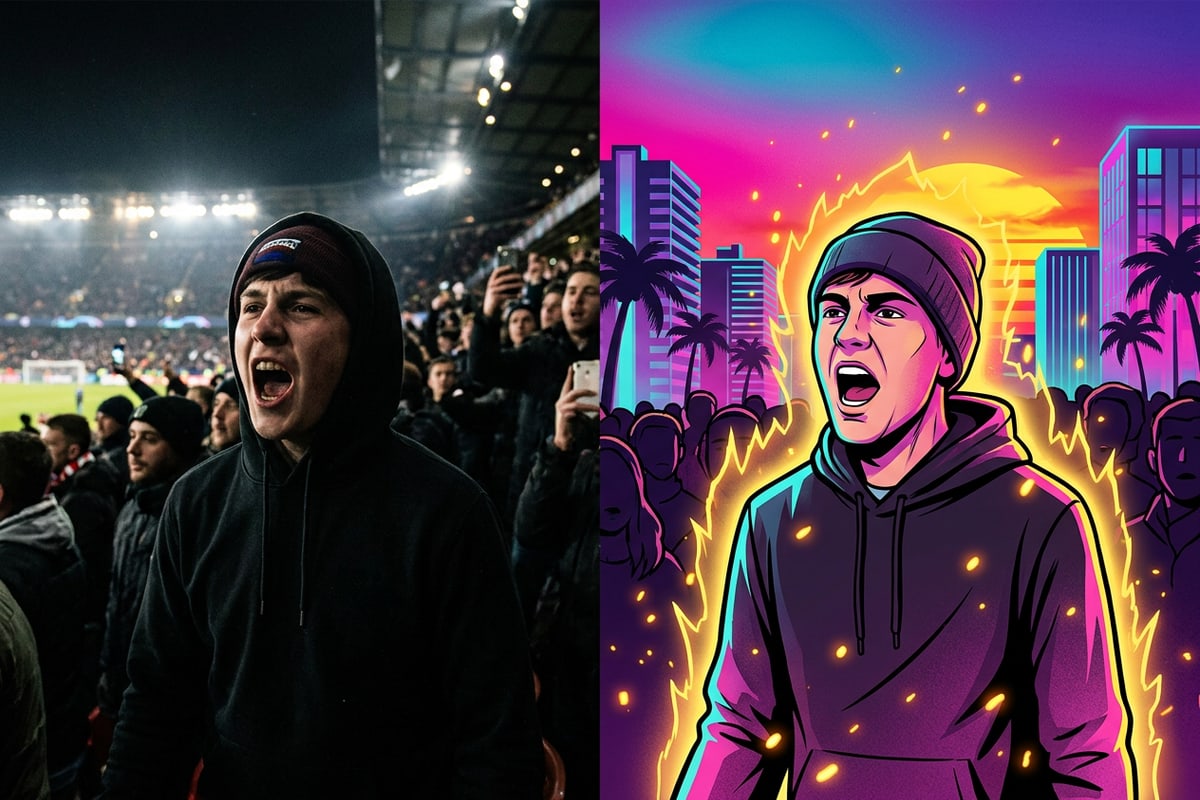
To help fans elevate their match-day media, CARA offers a suite of powerful, zero-skill AI tools on iOS and iPadOS. By utilizing these features, you can transform raw stadium snapshots into polished, creative keepsakes directly within the app. Whether you want to clean up a crowded selfie or turn a video of a goal celebration into a stylized comic, CARA's intelligent processing handles the heavy lifting.
- Clean the Frame with AI Eraser
Stadium selfies are almost always ruined by photobombers or distracting background clutter. Open your photo in CARA and use the AI Eraser to select and remove unwanted objects. The AI will intelligently fill in the background, though highly complex or dense crowds may require a second pass for a seamless look.
- Expand the Scene with Image Extender
If your smartphone photo of the pitch feels too cramped, use the Image Extender to uncrop the frame. This tool generates surrounding content beyond the original borders of your photo, allowing you to turn a tight vertical shot into a wide, dramatic stadium panorama. Note that the generated edge content is an estimate and may differ slightly from the actual physical scene.
- Edit Conversational Style with Cara Agent
If you prefer a hands-off approach, open the Cara Agent experience. You can edit or generate images simply by typing natural-language requests. Because this relies on cloud processing, results can vary, but it offers an incredibly intuitive way to experiment with different visual styles.
- Convert Match Highlights with Video to Manga
If you captured a video clip of a crucial match moment, you can convert it into a stylized comic strip. CARA's Video to Manga feature automatically analyzes your supported video clip, selects key action moments, and arranges them into a classic manga panel layout. Keep in mind that this is a specialized stylistic tool rather than a manual video timeline editor.
- Assemble a Custom Grid with Photo Collage Maker
Once your individual photos are cleaned and stylized, combine them using the Photo Collage Maker. Choose from a variety of flexible grid layouts and templates to organize your favorite moments from the tournament into a cohesive visual story.