
Flavio Cobolli US Open Overview: Seedings, Form, and Ranking Breakthrough
A complete breakdown of Flavio Cobolli's standing entering New York, including his No. 5 seed and ascent to World No. 6.
Flavio Cobolli's arrival at the US Open marks a decisive career turning point. Entering the tournament as the No. 5 seed, the Italian player reached a career-high ATP ranking of World No. 6, reflecting a breakout season across all surfaces.[1][3]
While early career momentum built primarily on clay courts, Cobolli's lead-up to New York demonstrated significant multi-surface evolution. Heavy baseline groundstrokes and aggressive court positioning allowed him to consistently defend ranking points and challenge top-tier opponents on fast hard courts.[1][2]
- Tournament Seeding: Reached his highest Grand Slam entry placement as the No. 5 seed in New York.[1][3]
- ATP Ranking Milestone: Earned a career-high World No. 6 standing ahead of the tournament draw.[1]
- Surface Versatility: Consolidated clay success with ATP hard-court victories and Masters 1000 momentum.[2][3]
Technical & Tactical Evolution: Adapting to Fast Hard Courts
Analyzing Cobolli's tactical modifications, baseline mechanics, and serve retention on fast hard courts.
To transition effectively from slower clay courts to fast hard surfaces, Cobolli modified his swing mechanics and baseline positioning. Taking the ball earlier on the bounce and flattening out his forehand drive allows him to neutralize opponent pace and shift rapidly from defensive counter-punching to offensive court control.[2][3]
Statistical profiles show that high first-serve win percentages serve as Cobolli's primary engine for holding service games. However, when his first-serve landing percentage dips into the 50-60% range, aggressive returners can press his second serve and create break-point opportunities.[2][3]
- Baseline Redirection: Taking ball contact earlier to shorten reaction windows for opponents on hard courts.[2]
- Serve Efficiency Dynamics: Strong first-serve conversion balanced by second-serve pressure when landing rates fluctuate.[2][3]
- Return Depth: Consistently hitting returns within two feet of the baseline to reset neutral rally points.[2]
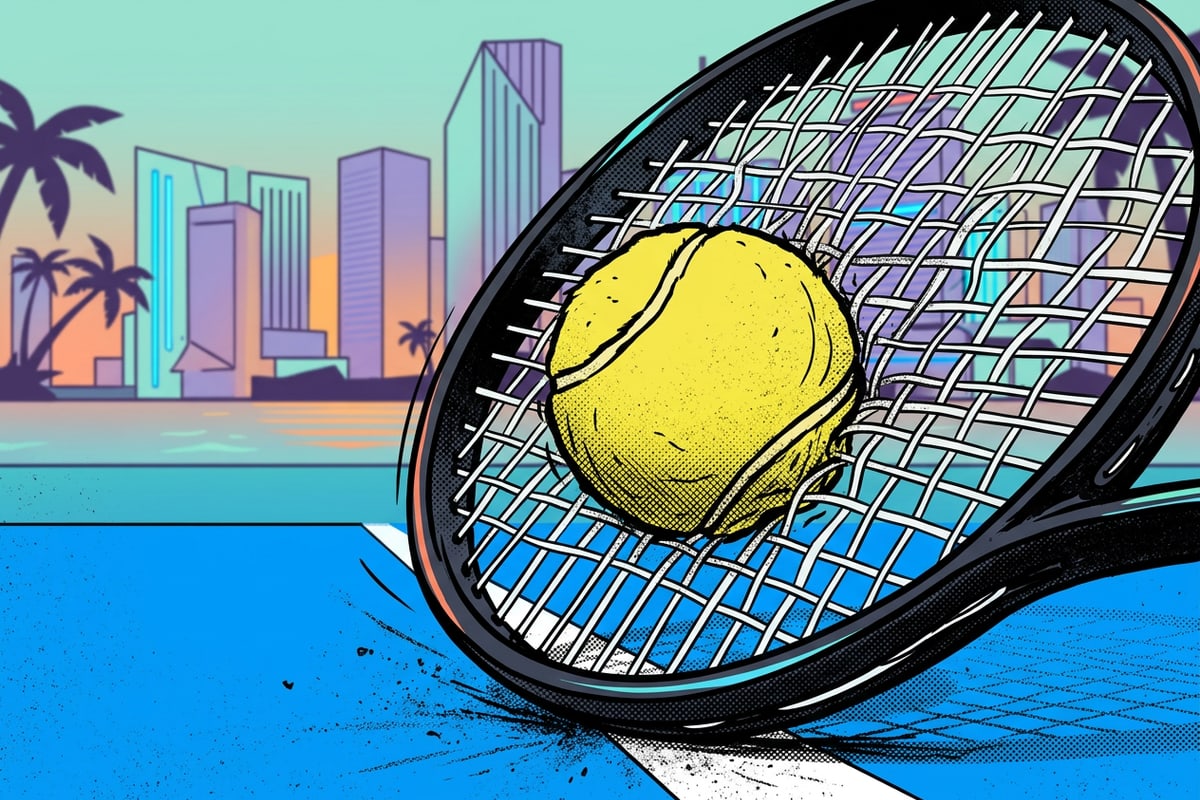
Grand Slam Match Decision Matrix: Evaluating Performance Dynamics
A performance framework assessing Cobolli's best-of-five set physical endurance and tactical split against contrasting playstyles.
A key finding in Cobolli's statistical profile is his distinct performance advantage in long-format matches. Across best-of-five set Grand Slam encounters, Cobolli holds a 64.1% win rate (25-14 record), significantly outperforming his 54.3% win rate in best-of-three set matches.[2]
This physical endurance premium allows Cobolli to absorb power against aggressive baseline hitters in early sets, wearing down opponents as rallies extend into fourth and fifth sets. Against aggressive net chargers, his topspin forehand dipping shot selection forces uncomfortable low-volley attempts.[2]
- Best-of-Five Set Record: 25 wins out of 39 matches (64.1% win rate), establishing physical durability in majors.[2]
- Versus Heavy Baseline Hitters: Uses deep counter-punching to lengthen rally counts and force opposition errors.[2]
- Versus Net Chargers: Deploys heavy topspin passing shots and dipping angles to disrupt volley timing.[2]

Documenting Match Highlights and Visual Storytelling
Practical ways sports fans and creators can curate and present matchday visual memories using mobile creative tools.
For tennis fans and creators documenting tournament action live from New York, managing spectator photos and match highlights can quickly become overwhelming. Curating clean digital match recaps helps retain key memories from Arthur Ashe Stadium and outer courts.[1]
Using mobile creative apps like Cara on iOS, creators can use Journey in One Page to automatically pick top shots from up to 50 spectator photos and generate a single-page visual story. For quick multi-photo layouts or privacy protection in stadium crowds, local tools like Photo Collage Maker and Face Mosaic simplify post-match sharing without exposing public faces.
- Visual Curation: Organize spectator photos into clean single-page highlights or multi-photo grid collages.
- Privacy Protection: Use on-device face blur tools to protect spectator privacy in crowded stadium shots.
- Gather Matchday Media
Select up to 50 stadium photos, court action shots, and ticket stubs from your iPhone camera roll.
- Select Visual Layout
Use Cara's Journey in One Page or Photo Collage Maker templates to organize key highlights automatically.
- Apply On-Device Edits
Blur background faces with Face Mosaic and overlay text captions for match scores before sharing.