
Key Findings: The Shift to Digital Avatars
This report compares physical rental costs against AI generation unit costs, analyzes 2026 heatwave data from the Japan Meteorological Agency, and evaluates conversational AI for cultural fidelity using cross-referenced consumer behavior studies.
The ¥3,500 Rental Trap
Advertised rental prices are loss-leaders that hide essential costs for hair, accessories, and professional photography across major tourist hubs.[2][13][14]
- Evidence chain
- Base rates of ¥3,500 quickly escalate when adding premium patterns, hair styling, and photography, resulting in a ¥19,200 total expenditure in Tokyo, a pattern mirrored by Kyoto providers where full packages easily exceed initial estimates.
- Why it matters
- AI generation offers a greater than 99 percent cost reduction for achieving the same visual social currency.
- Limit
- AI cannot replicate the tactile experience of wearing woven cotton or the physical presence of attending a festival.
Heatstroke Mitigation as a Creative Driver
Extreme 2026 humidity levels overlapping with the peak festival schedule make the traditional four-hour physical rental process a significant health risk.[1][3]
- Evidence chain
- The combination of Japan Meteorological Agency heat warnings for July and the dense scheduling of major Matsuri events creates a high heatstroke risk during the 45-minute dressing time and subsequent outdoor exposure.
- Why it matters
- AI portrait generation serves as a health-first alternative for tourists and locals who want to participate visually without physical danger.
- Limit
- The quality of the final output heavily depends on the lighting and composition of the user's base selfie.
Conversational Cultural Accuracy
Generic AI models often fail on technical Yukata details, but conversational AI allows for precise cultural corrections that respect regional nuances.[4][15]
- Evidence chain
- Traditional rules dictate a strict left-over-right collar fold. While standard AI models struggle with these cultural differences, conversational agents allow users to enforce this rule through natural language requests, bridging the gap in AI cultural localization.
- Why it matters
- Conversational AI is vastly superior to static filters for ensuring cultural respect and accuracy in digital garments.
- Limit
- Users must possess the cultural knowledge to prompt the AI correctly, as the system may not default to the correct folding rules automatically.
While AI offers a cost-effective visual alternative, it cannot replicate the physical atmosphere of attending a Matsuri or the tactile heritage of traditional Japanese textiles.
The Romantic Ideal vs. the 40°C Reality
Exploring the physical toll of traditional Yukata rentals during Japan's record-breaking 2026 summer heatwave.
The Japanese summer festival, or Matsuri, is a vibrant celebration of culture, community, and seasonal aesthetics. For decades, donning a traditional Yukata has been the ultimate way to participate in the July festival peak, offering a romanticized vision of summer in Japan. However, the reality of achieving this look has become increasingly difficult due to shifting climate patterns.[1]
In 2026, the Japan Meteorological Agency issued unprecedented warnings for a once-in-a-decade heatwave. With temperatures soaring to 40°C and humidity levels hovering around 80 percent, the physical act of wearing a Yukata has transformed from a joyful tradition into a potential health hazard. The garments, while made of breathable cotton, require tight sashes and multiple layers, restricting airflow and increasing the risk of heatstroke.[3]
For tourists and locals alike, the physical toll of navigating crowded festival streets in restrictive clothing under oppressive heat often ruins the experience. This climate reality is driving a massive shift in how people choose to participate in seasonal aesthetics, pushing many toward digital alternatives that offer the visual reward without the physical risk.
The '¥3,500 Trap': The Real Cost of Festival Photography
Breaking down the hidden fees of physical Yukata rentals and comparing them to the efficiency of AI generation.
Beyond the physical discomfort, the financial barrier to entry for traditional Yukata photography is steeper than it appears. Many rental shops in Tokyo and Kyoto advertise enticing base rates around ¥3,500, drawing in tourists looking for an affordable cultural experience. However, these advertised prices are often loss-leaders designed to get customers through the door.[2][13][14]
The true cost of a photogenic festival look quickly escalates. Upgrading to premium patterns, which are essential for standout photos, typically adds another ¥3,500. Professional hair styling, necessary to complement the garment, costs an average of ¥2,200. When factoring in professional photography packages to capture the look, the total expenditure frequently reaches between ¥8,000 and ¥25,000, with an average realized cost of ¥19,200.[2][13][14]
This steep price gap makes AI generation an incredibly attractive alternative. By utilizing conversational AI, users can achieve the same visual social currency for a fraction of a dollar per image, bypassing the hidden fees and logistical hurdles of physical rentals entirely.
The Authenticity Counter-Trend vs. Digital Souvenirs
Analyzing the cultural acceptance of AI avatars in Japan amidst a growing desire for authentic experiences.
As AI technology becomes more prevalent, a counter-trend favoring slow media and imperfect film photography has emerged in Japan. This movement values the tactile, unedited reality of physical experiences. However, this desire for authenticity does not necessarily conflict with the rise of AI portraiture, provided the technology is framed correctly.[2]
Research indicates that 85 percent of Japanese consumers express comfort with autonomous digital agents, a phenomenon partly attributed to cultural concepts like Shinto animism, which embraces the presence of spirit in non-human entities. When AI is positioned as a playful digital souvenir or a virtual fitting room rather than a deceptive replacement for reality, it aligns perfectly with modern consumer behavior.[17]
By treating AI Yukata portraits as a frictionless extension of digital identity, users can participate in the Matsuri aesthetic transparently and creatively, bridging the gap between cultural appreciation and modern convenience.
Step-by-Step: Creating Your AI Yukata Portrait with Cara Agent
A practical workflow for using CARA's conversational AI to generate stunning, culturally accurate festival portraits.
Creating a beautiful Yukata portrait no longer requires hours of preparation. With CARA's Conversational Photo Editing feature, known as Cara Agent, you can transform a casual selfie into a stunning festival portrait using natural language requests. The process is designed to be frictionless, requiring zero professional editing skills.
The key to a successful generation lies in how you communicate with the AI. Because Cara Agent relies on advanced models, cloud processing is required to generate your image, meaning results and processing times can vary based on your connection. This conversational approach allows for a level of personalization that rigid, pre-set tools simply cannot match.
- Select a High-Quality Base Photo
Start by uploading a clear, well-lit selfie to the Cara app. Ensure your face and shoulders are visible, as this provides the best foundation for the AI to build upon.
- Initiate the Cara Agent
Open the conversational interface and describe your desired transformation. For example, type: 'Change my outfit to a navy blue Yukata and set the background to a Japanese night festival with glowing lanterns.'
- Refine the Details
If the initial result isn't perfect, use follow-up prompts to adjust specific elements. You can ask the agent to change the color of the Obi belt or add traditional accessories like an Uchiwa fan.
Cultural Fidelity: Patterns, Collars, and Context
Educating users on traditional Yukata details to ensure their AI-generated portraits are culturally respectful.
When generating cultural garments with AI, fidelity and respect are paramount. Generic AI models often make critical errors when handling cultural nuances, such as folding the collar incorrectly. In traditional Japanese dress, the collar must always be folded left-over-right. The right-over-left fold is reserved exclusively for dressing the deceased for funerals, making it a severe faux pas in any other context.[4][15]
Because Cara Agent operates on natural language, you have the power to enforce these cultural rules explicitly. By including phrases like 'ensure the collar is folded left-over-right' in your prompt, you guarantee that your digital portrait respects traditional customs, overcoming the limitations of standard AI image generation.[4][15]
Beyond the collar, the patterns (Monyo) on a Yukata carry deep cultural significance. Requesting specific traditional patterns can elevate your portrait from generic to meaningful. For example, the Asanoha (hemp leaf) pattern symbolizes growth and resilience, while wisteria represents elegance and longevity.[4]
- Always specify a left-over-right collar fold to avoid cultural insensitivity.[4]
- Incorporate traditional patterns like Asanoha (hemp leaf) or Seigaiha (blue ocean waves) for added authenticity.[4]
- Use conversational prompts to refine the Obi (belt) style and ensure it matches the formality of the Yukata.[4]
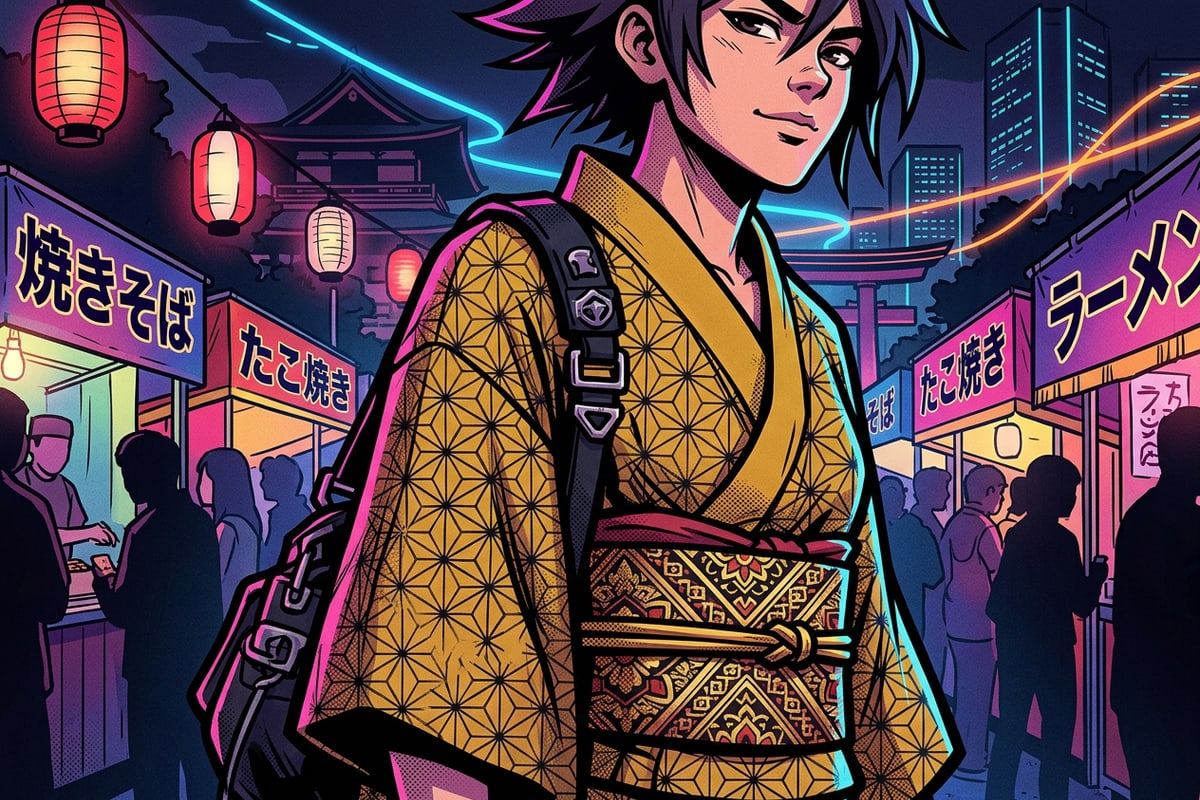
Beyond the Photo: AI Eraser for Perfect Festival Memories
Showcasing how AI object removal tools can rescue real travel photos taken in crowded festival environments.
Even if you decide to brave the heat and attend a Matsuri in person, capturing the perfect photo is a monumental challenge. Summer festivals are notoriously crowded, with thousands of attendees packing into narrow streets lined with food stalls. This often results in cluttered, chaotic backgrounds that distract from the main subject of your photo.
This is where CARA's AI Eraser becomes an invaluable travel companion. Instead of waiting hours for a clear shot, you can take your photo in the moment and use AI assistance to remove unwanted objects or photobombers later. The tool intelligently fills in the background, allowing you to clean up busy Matsuri scenes with a few simple taps.
By combining real-world photography with focused AI editing tools, you can preserve the authentic memory of the festival while removing the visual noise that detracts from the experience. Complex backgrounds may require another attempt, but the result is a much cleaner memory.
The Economics of AI Generation vs. Physical Rentals
A deep dive into the financial benefits of adopting digital avatars for seasonal cultural events.
The financial argument for digital Yukata portraits becomes undeniable when analyzing the broader economics of tourist activities in 2026. As inflation impacts travel budgets, the ¥19,200 average cost for a physical rental package represents a significant portion of a traveler's daily allowance. This expenditure is often justified by the desire for social currency—the ability to share a beautiful, culturally relevant image online.[2]
AI generation disrupts this economic model entirely. By utilizing conversational AI tools, users can generate dozens of high-quality, culturally accurate images for a fraction of the cost of a single physical rental. This democratization of aesthetic experiences means that participation in the Matsuri season is no longer restricted by budget constraints.
Furthermore, the shift toward digital utility aligns with broader consumer trends in Japan, where efficiency and convenience are highly valued. The ability to bypass the logistical hurdles of booking, fitting, and returning a physical garment allows travelers to allocate their time and money toward other authentic experiences, such as enjoying regional cuisine or attending multiple festival events.[17]
The Future of Frictionless Travel Photography
Summarizing the shift toward digital utility and how AI empowers users to experience cultural aesthetics safely.
The intersection of extreme weather and rising costs has fundamentally changed how we approach seasonal traditions. The 2026 Matsuri season highlights a critical turning point where the desire for cultural participation meets the necessity of physical safety and financial practicality.
AI-generated portraiture is not about replacing the physical reality of Japan's beautiful summer festivals; it is about providing a frictionless, accessible alternative. By leveraging conversational AI, anyone can experience the elegance of a Yukata without enduring a 40°C heatwave or navigating complex rental fees.
As digital avatars and synthetic photography become mainstream, the focus shifts from capturing reality exactly as it is, to creating beautiful, respectful representations of how we wish to experience the world.